Vintage Bridal Ring Sets: Seven Signs You Are Looking at Genuine Quality
Anyone can put "vintage" in a product title. Fewer sellers can back it up with actual craftsmanship. This is an inspection checklist: the same seven things an experienced jeweller's eye goes to first when judging whether a vintage bridal ring set, meaning a coordinated engagement ring and wedding band built in a historical design language, is genuinely well made or simply decorated to look old.
Sign One: The Detail Continues to the Profile, Not Just the Face
Hold the set sideways, not just top down. Genuine period-inspired craftsmanship carries its detail into the gallery, the small architectural space beneath the centre stone, and along the shoulders rising toward it. Cheaper reproductions decorate only the top surface, the part visible in a product photo, and leave the sides plain and flat.
What to look for specifically:
-
Filigree, pierced openwork metal lace, visible when you tilt the ring
-
A basket structure beneath the stone with its own shaping, not a bare mounting
-
Shoulders that taper or curve rather than running as flat, undecorated metal
Sign Two: Milgrain That Is Crisp, Not Smudged
Milgrain is the tiny beaded edging that traces the borders of Edwardian and Victorian-inspired pieces. On a well-made set, each bead is distinct and evenly spaced, applied by a skilled hand or precise machine work. On a poorly made one, the beading blurs into a rough, textured line, a shortcut that saves labour but destroys the fine, lace-like effect the whole style depends on.
Sign Three: The Two Rings Actually Nest Together
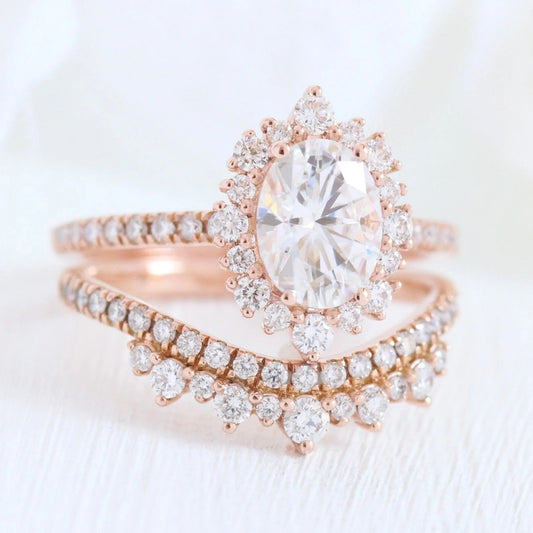
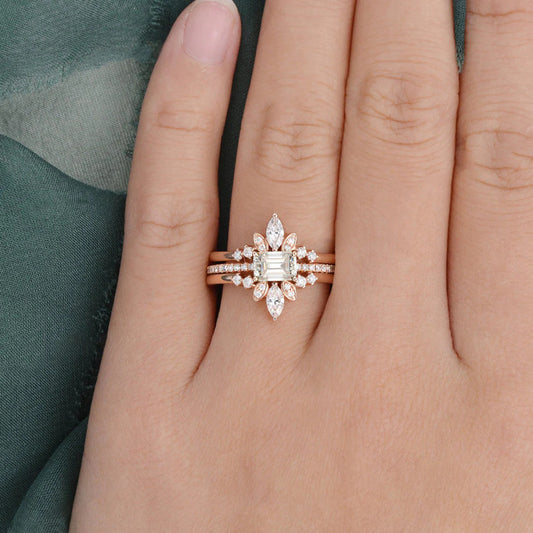
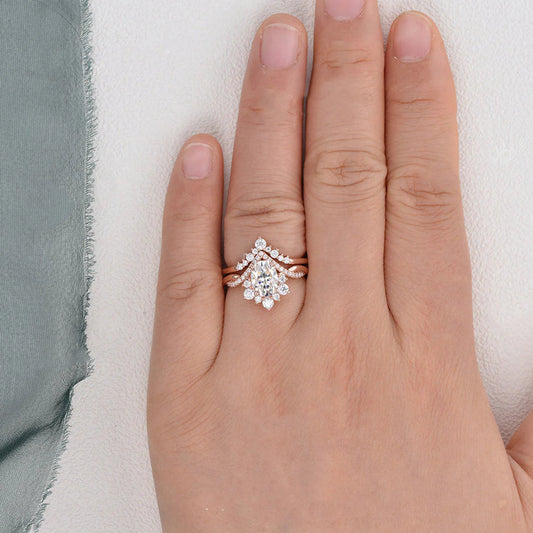
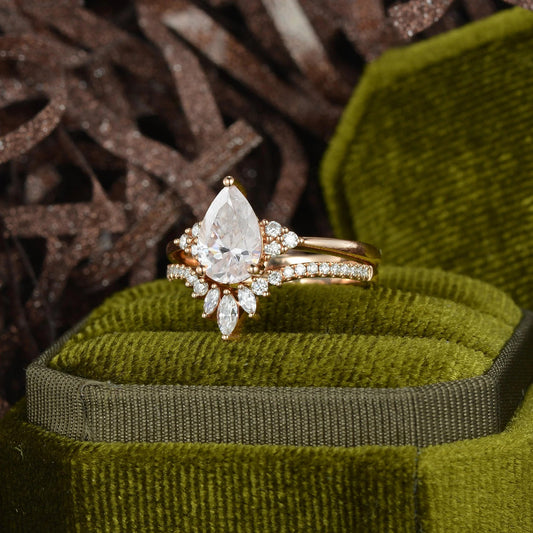
This is the sign specific to sets, not individual rings. Lay the engagement ring and wedding band flat, side by side, then press them together as they would sit on a finger. A genuine matched set closes with no visible gap; its curves and notches are designed specifically for its partner ring. A vintage-style band bought separately and merely similar in era often leaves a small but noticeable gap at the base, especially against a raised, ornate Victorian or Edwardian gallery.
Comparing coordinated options directly within a dedicated range of bridal set wedding rings is the simplest way to confirm true nesting before buying, rather than assembling two separately purchased pieces and hoping.
Sign Four: Stone Cuts Match the Claimed Era
Each historical period favoured specific diamond cuts, and a set claiming a particular era should use cuts consistent with it, or clearly disclose that it uses modern equivalents for durability.
-
Victorian pieces historically featured old mine cuts, squarish with a high crown
-
Edwardian pieces favoured old European cuts, rounder but still softer than modern rounds
-
Art Deco pieces relied heavily on step cuts, emerald and baguette shapes, and calibre-cut colored stones
A set using a crisp, modern round brilliant while claiming pure Victorian styling is not dishonest, since reproductions commonly use modern cuts for better light performance and durability, but it should say so plainly rather than implying period-authentic stones.
Sign Five: Metal Purity Is Stamped and Stated
Genuine quality work never hides its metal content. Look for a clear hallmark stamp, such as 14k, 18k, or a platinum purity mark, on both pieces of the set, plus a maker's mark. Vintage-style pieces sold without any stated purity, or with vague language like "gold toned," are a warning sign regardless of how convincing the design photography looks.
Sign Six: The Setting Meets Modern Structural Standards
Old soul, new engineering, that is the entire promise of vintage style over true antique. A well-made set should hold its stones as securely as any modern ring, with prongs or bezels rated for daily wear, not fragile decorative work that merely references the past. This matters more for the wedding band specifically, since it typically sees more continuous daily contact than the engagement ring alone.
Ask directly whether the piece was engineered to modern durability standards. A confident, specific answer is a good sign. A vague one is not.
Sign Seven: The Maker Can Talk About the Era Specifically
This is the simplest test and often the most revealing. Ask a seller what makes a piece "Art Deco" versus "Edwardian," and listen for a specific answer, geometric symmetry and step cuts versus lace-like filigree and softer curves, rather than a generic "it's vintage inspired" response. Sellers and workshops that genuinely understand the design language, including custom houses like Atya Jewels that build era-specific motifs to order, tend to describe their own work with real historical vocabulary, not marketing adjectives alone.
Putting the Checklist to Work
Run any candidate vintage bridal ring set through these seven signs before buying:
-
Detail continues into the profile view
-
Milgrain beading is crisp and even
-
The two rings nest together with no gap
-
Stone cuts match the claimed era, or the difference is disclosed
-
Metal purity is stamped and stated clearly
-
Construction meets modern durability standards
-
The seller can speak specifically about the era's actual design language
A set that passes all seven is very likely genuine, well-made vintage styling rather than a costume version of it. A set that fails two or more deserves a second look elsewhere.
Completing a Vintage-Inspired Bridal Look
Once the rings themselves check out, the same design language extends naturally to the rest of the wedding day look. A bride building a fully coordinated vintage aesthetic often starts by comparing period detailing across a broader collection of engagement rings, then extends the motif to drop-style diamond earrings echoing the same filigree or milgrain work. For the groom, a simpler matching band from a standard wedding bands range in the same metal tone keeps the couple's rings visually connected without requiring matching ornamentation on both hands.
Vintage styling rewards a careful eye more than almost any other bridal category, because its entire appeal lives in details easy to fake and just as easy to verify, once you know exactly where to look.
Vintage Bridal Ring Sets FAQs
What is the difference between antique and vintage-style bridal sets?
Antique means genuinely old, generally over a century. Vintage-style means newly made in a historical design language.
How can I tell if milgrain detailing is good quality?
Look for crisp, evenly spaced beading. Blurred or uneven texture signals a rushed or lower-quality process.
Do vintage-style sets use old-fashioned diamond cuts?
Some do, for authenticity. Many use modern cuts for better durability and light performance, and should disclose this.
Why does it matter if the two rings nest together?
A true set is engineered to close with no gap. Mismatched pieces bought separately often leave a visible space.
Is vintage-style jewellery as durable as modern jewellery?
Yes, when properly made. Reputable sets use modern construction standards beneath their period detailing.
What era is most requested for bridal sets today?
Art Deco, with its geometric symmetry and step-cut stones, remains the most popular vintage-inspired choice.