Platinum Bridal Ring Sets: The Physics Behind the Metal, Explained Simply
Jewellers describe platinum in glowing terms constantly. Rarely do they explain why it actually behaves the way it does. This article does that, treating platinum bridal ring sets as a small physics lesson rather than a sales pitch, because understanding the metal's actual properties makes the eventual buying decision far easier.
What Makes Platinum a Different Kind of Metal Entirely
Platinum is a naturally white, dense precious metal, and "dense" is doing real work in that sentence. A platinum ring of identical size to a gold ring weighs roughly 40 percent more, because platinum packs more mass into the same volume. That density is not a cosmetic detail; it is the root cause of nearly every practical advantage platinum bridal sets offer.
Bridal sets typically use platinum at 950 purity, meaning 95 percent pure platinum alloyed with a small amount of other metals, usually ruthenium or iridium, for workability. Compare this to 18k gold's 75 percent purity, and platinum immediately stands out as the purer precious metal choice at standard bridal grades.
Why Platinum Does Not "Wear Away" Like Other Metals
Here is the physics that surprises most buyers. When gold jewellery scratches, tiny particles of metal are genuinely displaced and lost, gradually thinning the metal over years. Platinum behaves differently because of its density and malleability. A scratch on platinum typically displaces the metal sideways rather than removing it entirely, meaning the total metal content stays largely intact even as the surface develops a soft, brushed texture called a patina.
This is why platinum rings from a century ago often still have close to their original weight, while comparably old gold pieces have measurably thinned. For a bridal set intended to last generations, this single property explains most of platinum's reputation.
The Patina: A Feature, Not a Flaw
New platinum arrives with a bright, mirror polish. Within weeks or months of daily wear, that polish softens into a matte, silvery patina as microscopic surface scratches accumulate evenly. Many owners love this look; it reads as lived-in and authentic rather than damaged. For those who prefer the original bright shine, a jeweller can re-polish platinum back to its mirror finish at any point, a straightforward service since, again, the metal itself was displaced rather than lost.
Why Platinum Is the Preferred Choice for Sensitive Skin
Platinum used in fine jewellery is typically alloyed with other platinum-group metals rather than nickel, the most common trigger for metal allergies in jewellery. This makes 950 platinum one of the most hypoallergenic options available for a piece worn continuously against skin for decades, a genuinely practical consideration for a wedding band specifically, since it rarely comes off.
How This Physics Translates to a Bridal Set Specifically
A bridal set means two rings worn together daily, often for the rest of a lifetime, so the cumulative effect of these properties compounds:
-
The engagement ring's prongs, which take the most physical stress holding a center stone, benefit directly from platinum's resistance to metal loss, keeping stones secure for longer between prong checks
-
The wedding band, worn with zero breaks, benefits from platinum's hypoallergenic composition more than any other piece in a person's jewellery collection
-
Both rings develop a matching patina over time if worn together consistently, aging visually as one coordinated unit rather than at different rates
The Honest Trade-Offs
Platinum's density is also why it costs more, both in raw material and in the extra labour required to work a harder, denser metal compared to gold. It is also, weight for weight, a heavier ring on the hand, noticeable to some wearers switching from gold and unnoticed by others within days.
Buyers weighing platinum against white gold for a bridal set should note that white gold requires periodic rhodium replating to stay bright, a maintenance cost platinum never needs, which can offset some of platinum's higher upfront price over a long enough timeline.
Choosing Stones and Settings for a Platinum Set
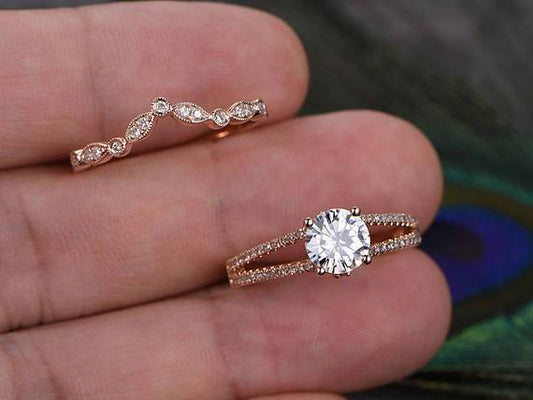
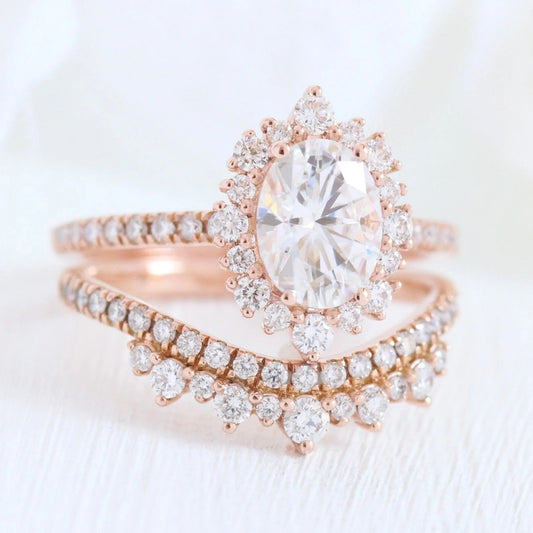
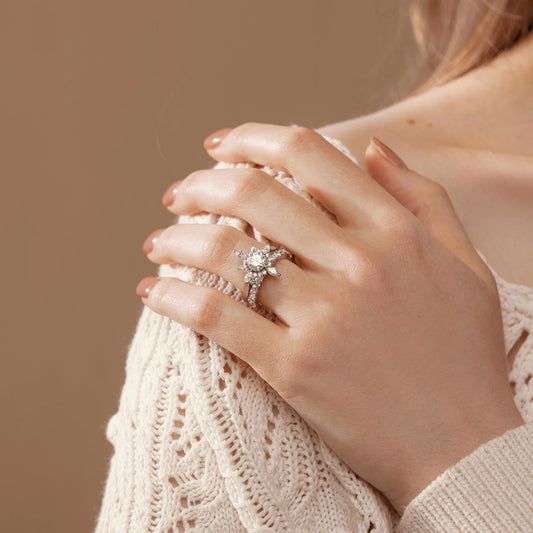
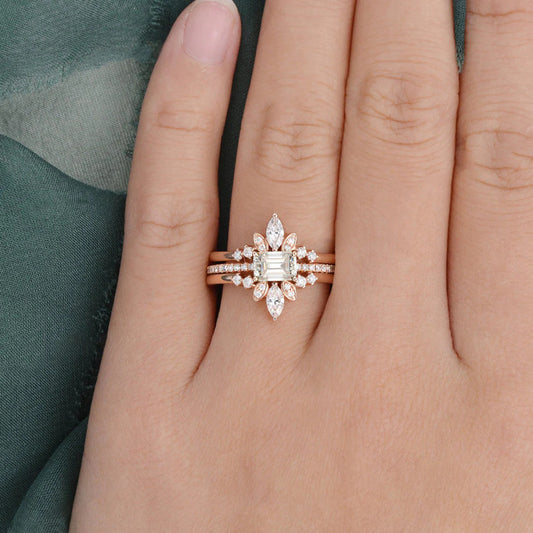
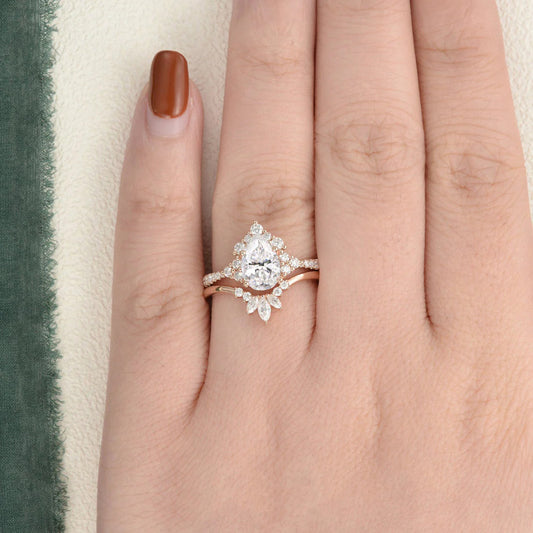
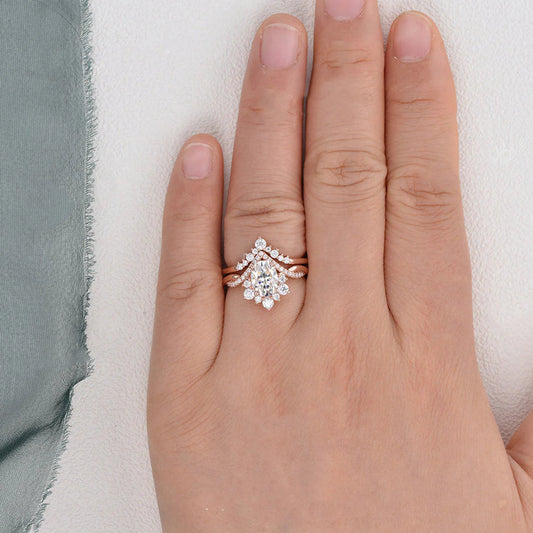
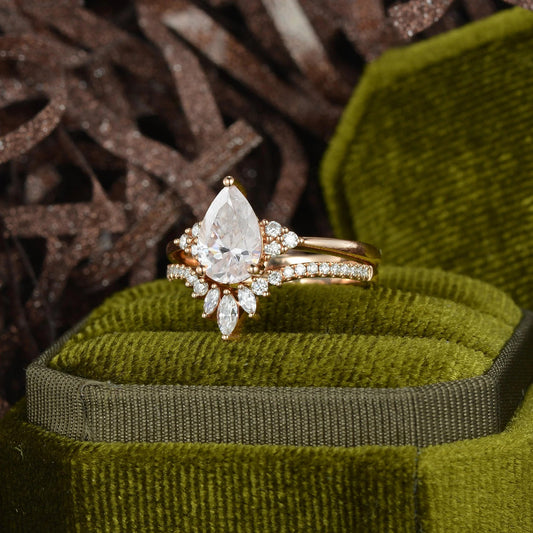
Platinum's strength makes it particularly well suited to secure prong work, which is why many buyers pair it with larger centre stones. Comparing platinum-set options across a catalogue of engagement rings shows how commonly the metal is chosen specifically for its holding power on significant stones. The same durability logic extends naturally to a matched band; browsing dedicated bridal set wedding rings in platinum shows how the two pieces are engineered together from the same dense, stable material.
For couples, a groom's platinum band from a standard wedding bands range wears at the same slow, dignified rate as the bride's set, ageing as a matched pair over decades. Brides completing a platinum bridal look often choose platinum-set diamond earrings for the same reason: consistent metal, consistent long-term wear characteristics. Custom workshops, including Atya Jewels, work with platinum specifically for buyers who have decided durability and hypoallergenic wear matter more than upfront cost.
The Simple Summary
Platinum is dense, so it displaces rather than sheds metal when scratched. It is pure, so it resists tarnish and needs no replating. It is composed of platinum-group metals, so it suits sensitive skin better than most alternatives. And because a bridal set means two rings worn continuously for a lifetime, these properties matter more here than in almost any other jewellery category.
Platinum Bridal Ring Sets FAQs
Why is platinum considered more durable than gold? Its density means scratches displace metal rather than removing it, so the ring retains its mass over decades.
What does 950 platinum mean?
95 percent pure platinum alloyed with a small amount of other platinum-group metals for workability.
Does platinum need replating like white gold?
No. Platinum does not tarnish and never requires replating, only optional re-polishing.
Is platinum good for sensitive skin?
Yes. It is typically nickel-free, making it one of the most hypoallergenic bridal metals available.
Why does platinum develop a matte finish over time?
Microscopic surface scratches accumulate evenly, creating a soft patina that many owners prefer to a mirror shine.
Is platinum heavier than gold?
Yes, roughly 40 percent heavier than gold at the same ring size, due to its higher density.