Lab Grown Diamond Earrings: A Straight-Talking Buyer's Guide
Here is the short version before we go deep. Lab-grown diamond earrings hold real diamonds, created above ground instead of mined. They are chemically, physically, and optically identical to mined diamonds, graded by the same labs against the same standards, and typically priced 60 to 80 per cent lower for equivalent quality. That gap is the entire reason this category has exploded: at the same budget, you take home visibly larger or cleaner stones.
Now the details, structured as the five decisions you will actually make.
Decision 1: How Are Lab-Grown Diamonds Made, and Does the Method Matter?
Two processes dominate.
HPHT (High Pressure High Temperature) recreates the crushing conditions of the Earth's mantle. CVD (Chemical Vapour Deposition) grows diamond layer by layer from carbon-rich gas in a vacuum chamber. Both produce genuine diamond crystals.
Does the method matter to you as a buyer? Rarely. What matters is the final graded quality of each stone. Judge the certificate, not the growth chamber.
One honest caveat: lab-grown and mined diamonds behave differently in the resale market, and prices for lab-grown stones have declined as production scales. Buy them for beauty and value at purchase, not as an investment.
Decision 2: Which of the 4Cs Matter Most for Earrings?
Earrings sit farther from the viewer's eye than a ring does. That changes the priority order.
- Cut comes first. Sparkle is what people notice from across a table. Choose Excellent or Very Good cut grades.
- Color can relax slightly. Near-colourless grades (G through J) look white on the ear, especially in yellow or rose gold settings.
- Clarity can relax a lot. Nobody examines earlobes with a magnifier. SI1 and even SI2 stones that are eye-clean deliver full beauty at a lower cost.
- Carat is a matched pair number. A "1 carat" pair of studs means two stones of about 0.50 carats each.
This priority order is the single biggest money-saver in the entire category. Spend on cut, save on clarity.
Decision 3: Studs, Halos, Hoops, or Drops?
Each setting style serves a different life.
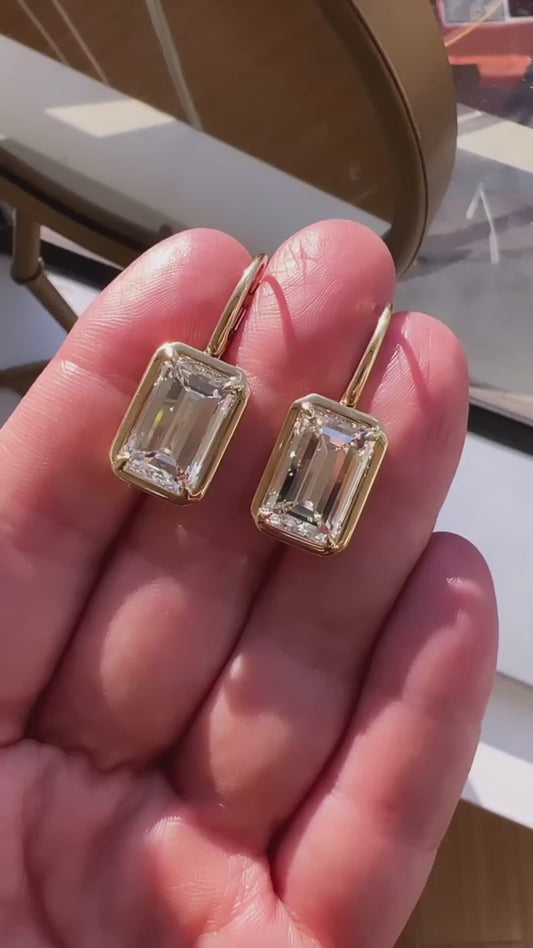
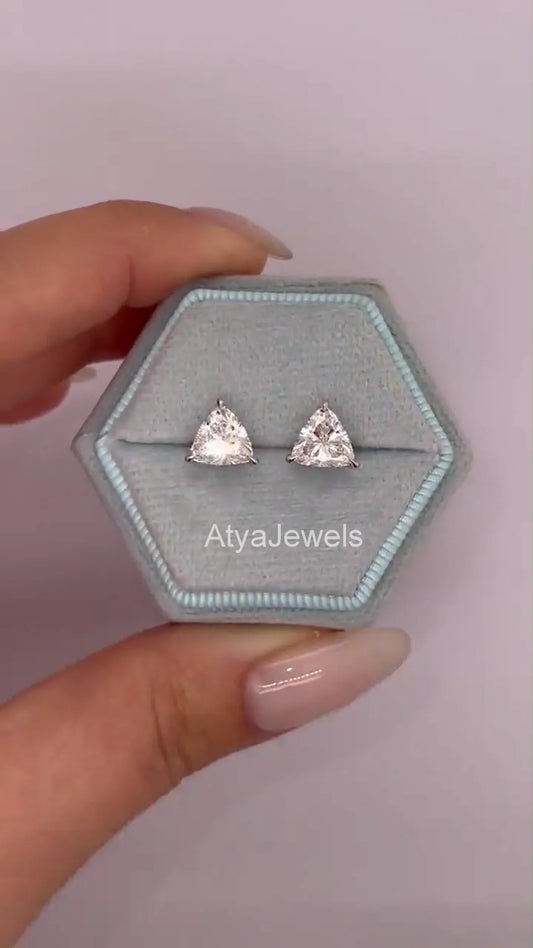
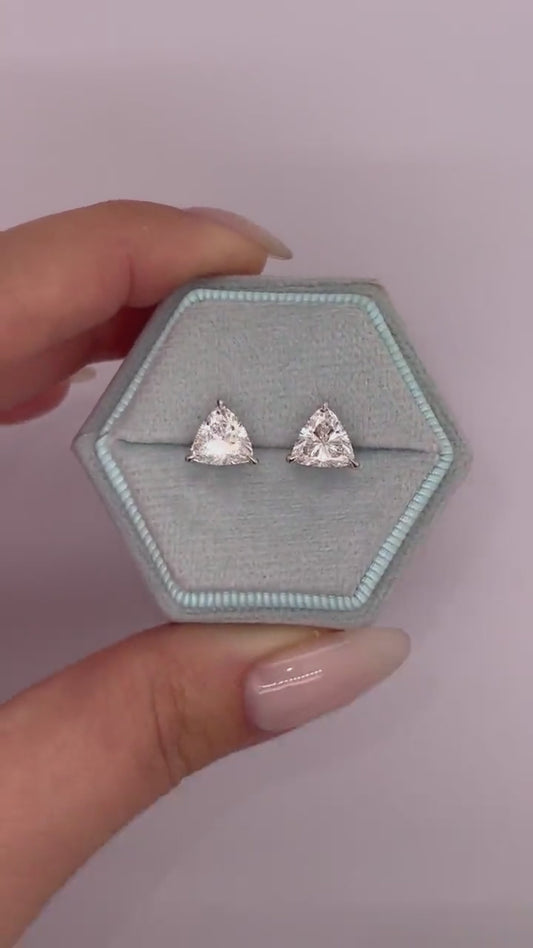
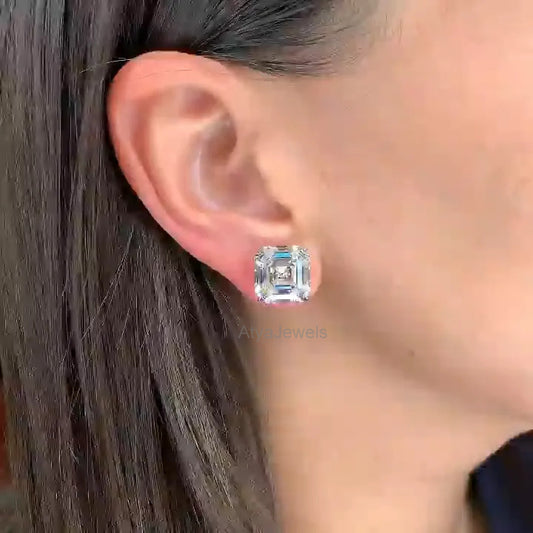
Classic studs are the default first purchase: four or six prong settings, worn daily, matched with everything. Martini-style three-prong settings sit closer to the ear and droop less.
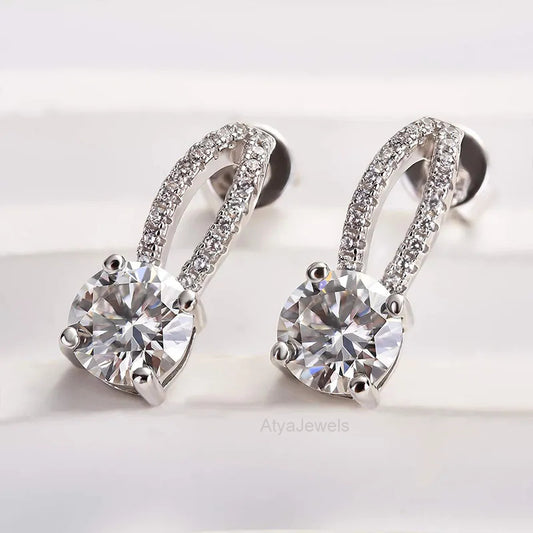
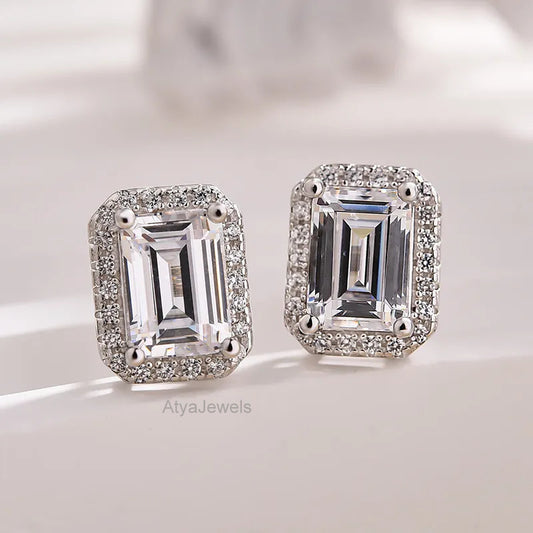
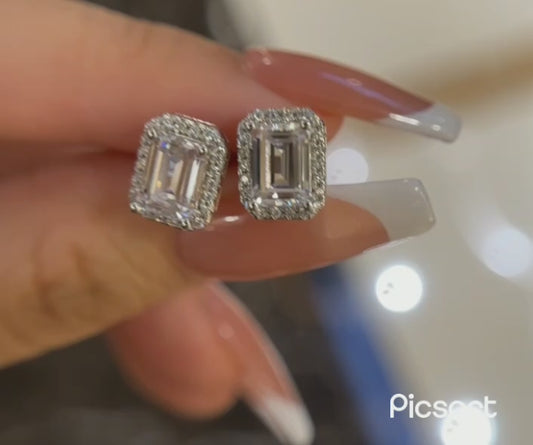
Halo studs surround each centre stone with tiny diamonds, boosting perceived size by up to a visual carat. They suit buyers who want maximum presence per dollar.
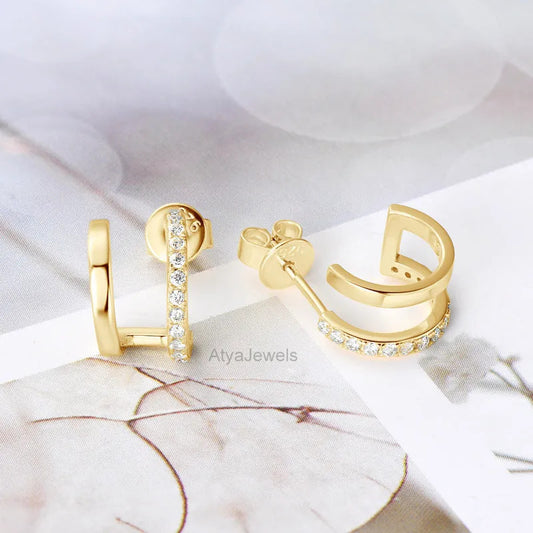
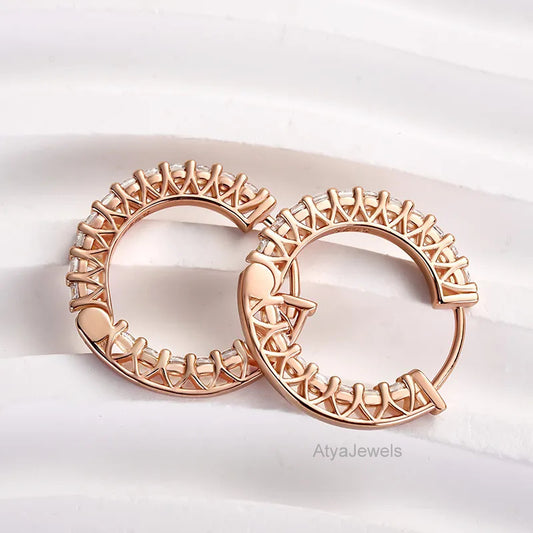
Diamond hoops, either huggies or larger inside-out designs, bring movement and read more fashion-forward. They pair well with stacked ear piercings.
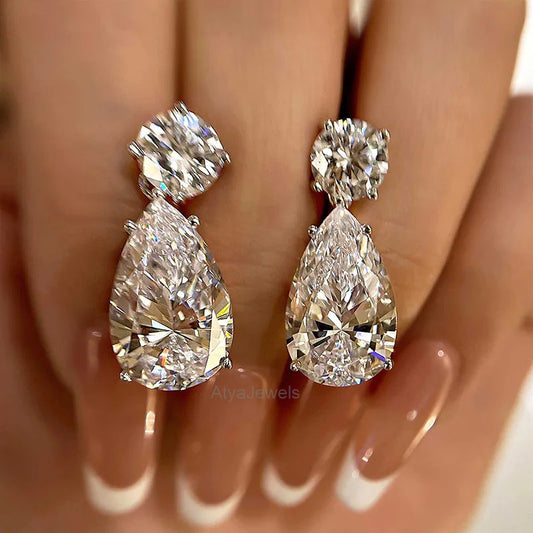
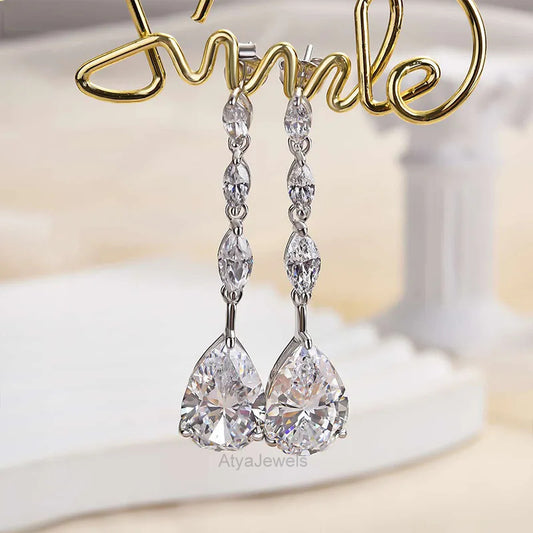
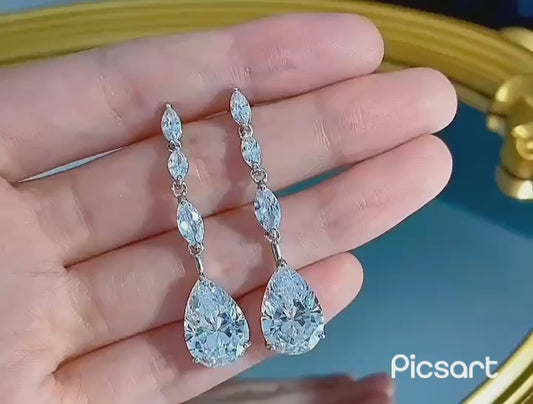
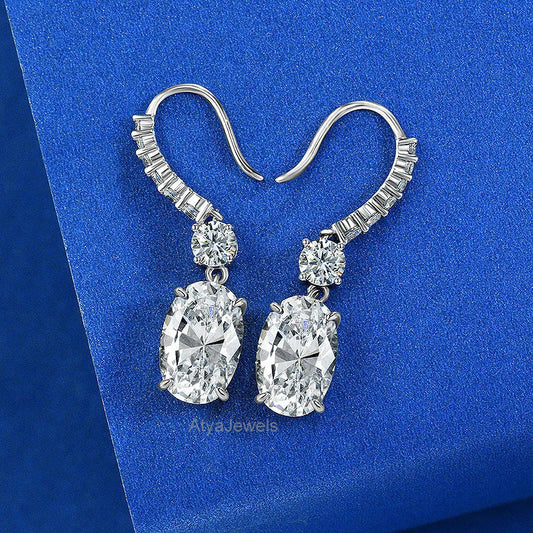
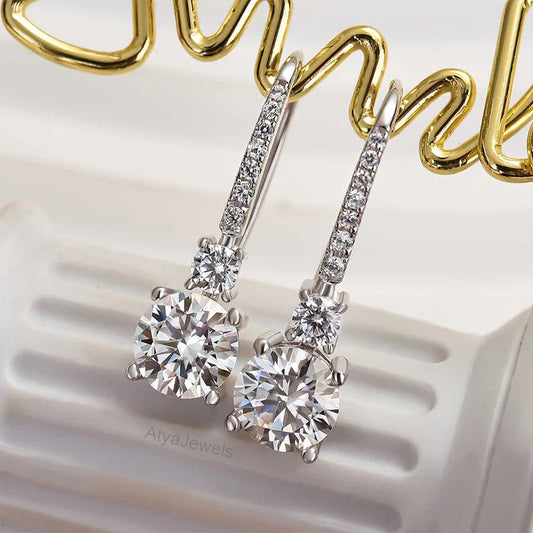
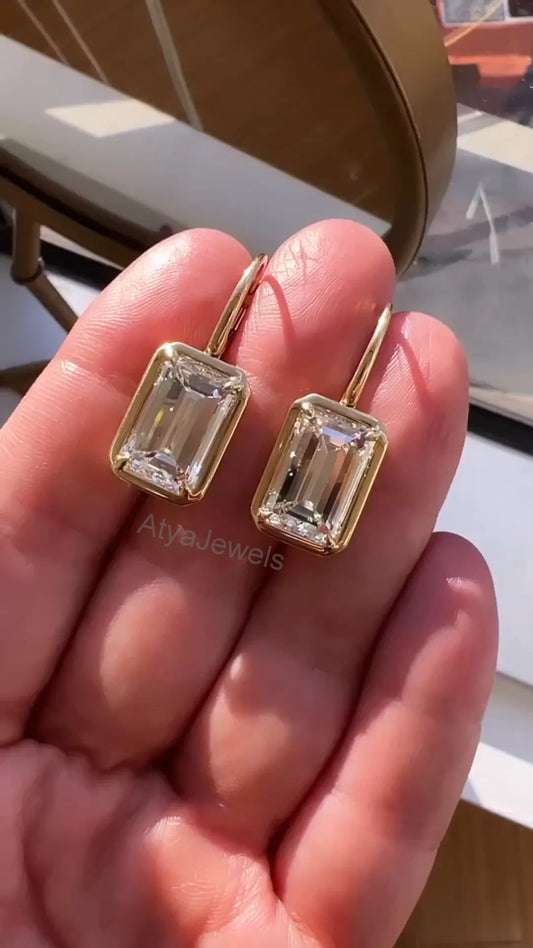
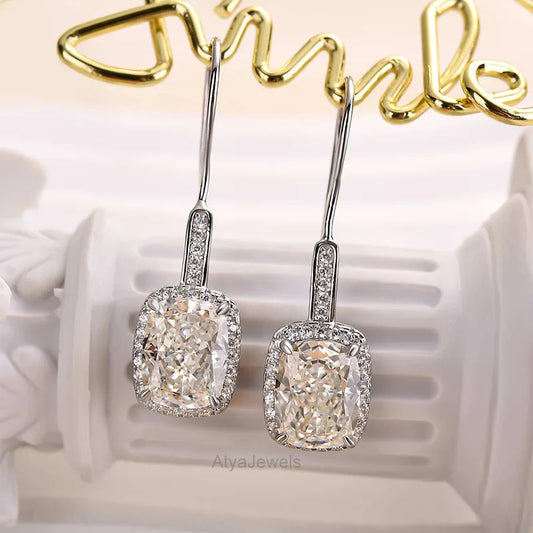
Drops and dangles catch light with motion and elevate evening wear. Many brides choose lab-grown drops as their wedding day earrings, then coordinate their ring stack from a collection of bridal set wedding rings in matching metal.
A note on backs: screw backs offer the most security for valuable studs, push backs are easiest daily, and La Pousette style locking backs split the difference.
Decision 4: What Should Certification and Settings Look Like?
For stones above roughly 0.30 carats each, ask for grading reports from an independent laboratory such as IGI or GIA, which both grade lab-grown diamonds. The report confirms the stone is lab-grown, states its 4C grades, and typically matches a microscopic inscription on the girdle of the stone.
For the settings themselves, check:
- Metal purity stamps (14k, 18k, or 950 for platinum)
- Prong symmetry, with no visible glue or gaps
- Post thickness, since thin posts bend and tear piercings over time
Retailers like Atya Jewels list certification details per product, which is exactly the transparency you should expect anywhere you shop for a diamond earrings online.
Decision 5: How Do You Get the Most Value at Each Budget?
Rough guidance by total carat weight, assuming near-colourless, eye-clean lab-grown stones:
- Under 0.50 carat total: everyday classic studs, ideal first fine jewellery purchase or graduation gift
- 0.50 to 1 carat total: the sweet spot for daily-wear studs with clear presence
- 1 to 2 carats total: statement studs that read unmistakably from a distance
- Above 2 carats total: occasion pieces, where screw backs, and insurance both become essential
Two more value moves. First, buying just under round numbers (0.90 instead of 1.00 total carats) often saves noticeably with no visible difference. Second, coordinating earrings with an existing ring purchase, such as matching the shape of your engagement ring's centre stone, creates a set effect that looks far more expensive than the sum of its parts. Grooms take note: matched studs are a popular wedding morning gift alongside the wedding bands exchange.
Care is simple: warm soapy water and a soft brush every couple of weeks, and check prongs twice a year.
Lab-Grown Diamond Earring FAQs
Q1. Are lab-grown diamond earrings real diamonds?
Yes. They are chemically and optically identical to mined diamonds and are recognized as diamonds by the FTC.
Q2. Can anyone tell that my earrings are lab-grown?
Not by eye. Only specialized lab equipment can distinguish the origin.
Q3. Do lab-grown diamonds get cloudy over time?
No. Diamond is diamond. Any cloudiness is surface residue that cleaning removes.
Q4. What clarity grade should I buy for studs?
Eye-clean SI1 or SI2 offers strong value, since earrings are never viewed up close.
Q5. Are lab-grown diamond earrings good gifts?
Yes, especially for milestones. Larger, better-graded stones fit within typical gift budgets.
Q6. Should I insure my earrings?
For higher-value pairs, yes. Keep the grading reports and the purchase receipt for appraisal.