Heart-Shaped Engagement Ring: Why Romantic Symbolism Is Driving 2026 Demand
Heart-shaped engagement rings are experiencing a romantic resurgence in 2026. Romantic and expressive, the heart shape is trending thanks to bold brides and innovative settings again. This guide covers everything you need to know about selecting, pricing, and customizing a heart diamond ring that matches your vision and budget.
What Makes Heart-Shaped Diamonds Stand Out in 2026
Heart-shaped diamonds are best for people who want a deeply meaningful and elegant design, though they require excellent symmetry for the best look. Unlike round or oval cuts that dominate the market, heart shapes deliver immediate emotional impact—the stone itself becomes a symbol of commitment.
The heart cut is a modified brilliant cut, meaning it combines the sparkle of round diamonds with a distinctive silhouette. This hybrid approach gives you maximum light return while maintaining that unmistakable romantic profile. In practice, heart diamonds perform exceptionally well under natural light, making them ideal for everyday wear and photography.
Key advantages of heart-shaped diamonds:
-
Emotional symbolism: The shape itself communicates love and commitment without additional messaging
-
Distinctive appearance: Stands apart from conventional round or oval rings in any setting
-
Versatile metal pairing: Works beautifully in yellow gold, white gold, platinum, or rose gold
-
Customization potential: Pairs well with hidden halos, side stones, or minimalist solitaire bands
-
Lab-grown affordability: Because lab-grown diamonds are more affordable, buyers are embracing uncommon shapes of diamond rings without limitations.
When evaluating a heart diamond, symmetry is non-negotiable. The two lobes must be perfectly balanced, and the point at the bottom should align precisely with the centre. A poorly cut heart will look lopsided or unbalanced on the hand—this is the most common complaint from buyers who skip professional grading.
Heart Diamond Pricing: Lab-Grown vs. Natural in 2026
Heart-shaped diamonds cost significantly less when lab-grown compared to natural diamonds of equivalent quality. This price advantage is reshaping how couples approach engagement ring budgets.
Lab-Grown Heart Diamond Pricing (2026)
|
Carat Weight
|
Color Grade
|
Clarity
|
Estimated Price Range
|
|
1.0 carat
|
D-F (Colorless)
|
VS1-VS2
|
$800–$1,200
|
|
1.5 carat
|
D-F (Colorless)
|
VS1-VS2
|
$1,400–$1,900
|
|
2.0 carat
|
D-F (Colorless)
|
VS1-VS2
|
$2,100–$2,800
|
|
2.5 carat
|
D-F (Colorless)
|
VS1-VS2
|
$2,900–$3,800
|
Natural Heart Diamond Pricing (2026)
|
Carat Weight
|
Color Grade
|
Clarity
|
Estimated Price Range
|
|
1.0 carat
|
D-F (Colorless)
|
VS1-VS2
|
$4,500–$6,500
|
|
1.5 carat
|
D-F (Colorless)
|
VS1-VS2
|
$7,200–$10,000
|
|
2.0 carat
|
D-F (Colorless)
|
VS1-VS2
|
$10,500–$14,500
|
|
2.5 carat
|
D-F (Colorless)
|
VS1-VS2
|
$14,000–$19,000
|
The savings are substantial. A 1.5-carat lab-grown heart diamond in D color, VS1 clarity costs roughly $1,650, while an equivalent natural diamond runs $8,600—a 81% savings. This price gap allows couples to either reduce their budget or upgrade to a larger stone, higher color grade, or more elaborate setting.
Economic pragmatism is the number one reason couples are choosing lab-grown diamonds, as they are more affordable and couples can get more—a bigger, better colour, higher clarity diamond—for their money. For heart-shaped rings specifically, this means you can invest in a larger, more visually impressive stone without stretching your budget.
Setting Styles That Elevate Heart-Shaped Diamonds
The setting you choose dramatically impacts how your heart diamond appears on the hand. Unlike round diamonds, which work in nearly any setting, heart shapes benefit from specific design approaches.
Solitaire Settings: A simple band allows the heart's shape to dominate. This works best with thicker bands (2–3mm) to balance the stone's visual weight. Thin, delicate bands can make a heart diamond look oversized or unstable.
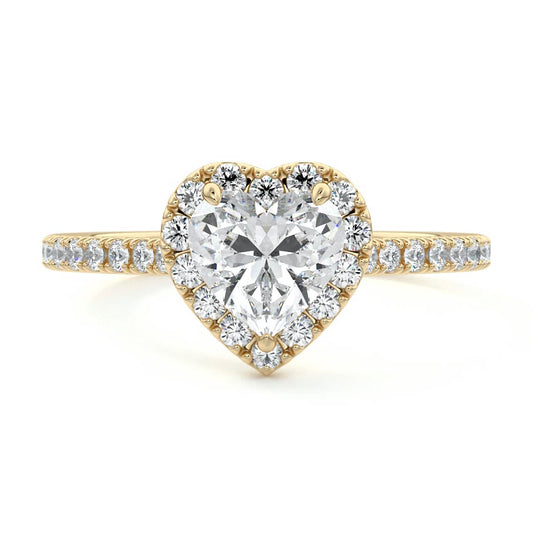
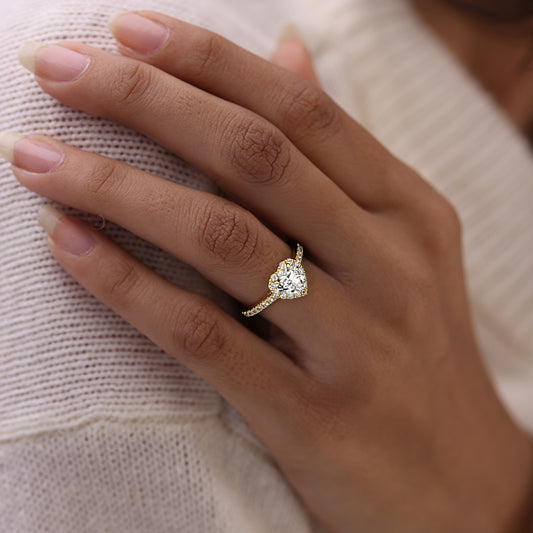
Hidden Halo Settings: Hidden halos add sparkle without changing the classic silhouette, and they make the center diamond look significantly larger. For heart diamonds, a hidden halo creates the illusion of a larger stone while adding subtle sparkle that catches light from the side.
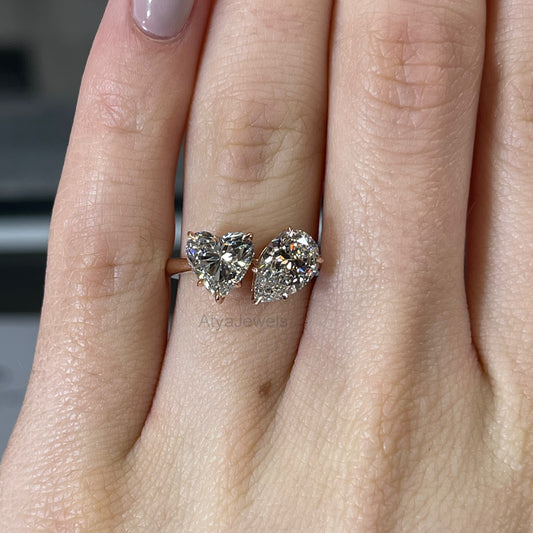
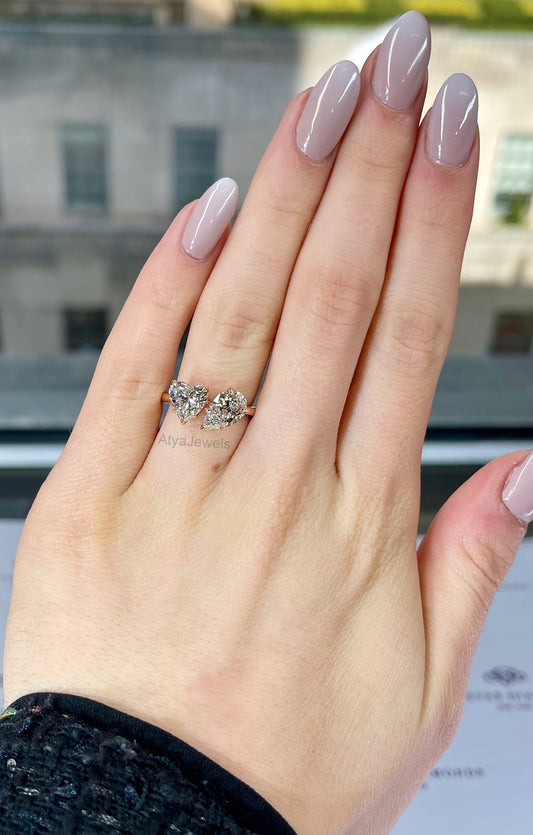
Two-Stone (Toi et Moi) Designs: Asymmetric duos like heart + emerald feel both symbolic and fashion-forward. This pairing is particularly romantic—the heart represents love, while the complementary stone (emerald, round, or pear) adds dimension and visual interest. Explore Atyajewels for custom two-stone configurations that match your vision.
Bezel Settings: Bezel-set engagement rings are surging in popularity for brides who want a sleek, modern, and ultra-secure setting, with a thin rim of metal encircling the diamond instead of traditional prongs. Bezels work exceptionally well with heart shapes because the metal frame emphasizes the stone's geometry.
Metal choice matters too. Yellow gold (specifically 14k and 18k) now accounts for the majority of engagement ring sales because it contrasts beautifully with "Icy White" lab-grown diamonds (D-F Color). For heart diamonds, yellow gold creates warmth that complements the romantic symbolism.
How to Evaluate Heart Diamond Quality: The Practical Checklist
Buying a heart diamond requires attention to specific quality markers. Here's what to inspect before committing:
- Symmetry Assessment
- Compare the two lobes side-by-side; they should be identical in size and shape
- Check that the point at the bottom aligns with the center of the top
- Look for any asymmetry in the cleft (the V-shaped indent at the top)
- Request high-resolution images or videos from multiple angles
- Color Grade Evaluation
- For lab-grown diamonds, aim for D-F (Colorless) to maximize sparkle
- Heart shapes show color more readily than round diamonds due to their facet pattern
- If the budget is tight, VS1 clarity with E-F colour outperforms SI1 clarity with D color
- Clarity Inspection
- Heart diamonds are step-cut hybrids, meaning inclusions are more visible than in brilliant cuts
- Minimum clarity: VS2 (Very Slightly Included)
- Ideal clarity: VS1 or higher for peace of mind
- Request a GIA or IGI grading report; never buy without third-party certification
- Cut Quality Verification
- Excellent or Very Good cut grades only; Good or Fair cuts will appear dull
- Check the depth percentage (should be 58–66% for heart shapes)
- Table percentage should fall between 53–63%
- Polish and symmetry grades must both be Excellent or Very Good
- Carat Weight Reality Check
- Heart diamonds appear larger than round diamonds of the same carat weight
- A 1.5-carat heart often looks similar in size to a 1.8-carat round
- This visual advantage means you can go slightly lower in carat weight without sacrificing presence
When shopping for engagement rings, request detailed specifications for each stone. Reputable sellers provide GIA or IGI reports, high-resolution imagery, and video documentation.
Customization Options: Building Your Perfect Heart Ring
One of the biggest advantages of shopping for heart-shaped engagement rings in 2026 is the customization landscape. Lab-grown diamonds and modern manufacturing have made bespoke designs accessible and affordable.
Metal Selection
Your metal choice affects both aesthetics and durability:
-
14K Yellow Gold: Warm, romantic, pairs beautifully with colorless lab diamonds; most affordable option
-
18K White Gold: Classic, modern, enhances diamond sparkle; slightly more expensive than 14K yellow
-
Platinum: Maximum durability, hypoallergenic, premium pricing; ideal for daily wear
-
Rose Gold: Trendy, romantic, complements warm skin tones; similar pricing to white gold
-
Two-Tone: Yellow gold band with platinum or white gold head; combines aesthetics with security
Band Width and Profile
Heart diamonds benefit from substantial bands. A 2.5–3mm band provides visual balance and structural integrity. Thinner bands (under 2mm) can appear delicate but may bend over time with daily wear. Wider bands (3.5mm+) create a statement look but increase overall weight and cost.
Care, Maintenance, and Long-Term Durability
Heart-shaped engagement rings require specific care to maintain their beauty and structural integrity.
Daily Wear Considerations
Heart diamonds are durable—they rank 10 on the Mohs hardness scale, the same as natural diamonds. However, the pointed bottom of the heart is vulnerable to chipping if struck directly. Avoid wearing your ring during:
- Gym workouts or contact sports
- Gardening or yard work
- Swimming (chlorine can dull the setting)
- Dishwashing (harsh soaps and hot water)
Cleaning Protocol
- Mix warm water with mild dish soap
- Soak the ring for 15–20 minutes
- Use a soft-bristled toothbrush to gently scrub the band and stone
- Rinse thoroughly under running water
- Dry with a lint-free cloth
Avoid ultrasonic cleaners and steam cleaning for heart diamonds—the vibrations can loosen prongs or damage the setting.
Professional Maintenance Schedule
Visit a jeweller every 12–18 months for:
- Prong inspection and tightening
- Professional cleaning and polishing
- Band integrity check
- Setting security assessment
For Wedding Bands that will be worn alongside your heart engagement ring, ensure both pieces are inspected together to prevent friction damage.
Resale and Insurance Value
Lab-grown heart diamonds hold value differently than natural diamonds. While they won't appreciate, they maintain 40–50% of purchase value if resold. For insurance purposes, obtain an independent appraisal from a certified gemologist. Most homeowner's or renter's insurance policies require a separate jewellery rider for engagement rings valued over $2,500.
Why Heart-Shaped Rings Are the Smart 2026 Choice
Heart-shaped engagement rings represent a shift in how couples approach engagement jewelry. Rather than defaulting to round or oval cuts, buyers are choosing shapes that reflect their personality and values.
The heart shape communicates intention. It says, "I chose this because it means something to me," rather than "I chose this because it's traditional." This aligns with 2026 engagement ring philosophy: Future brides and grooms are moving toward styles that feel more personal, expressive, and deeply symbolic, exploring fresh designs, unique stones, and modern twists on traditional favorites.
Lab-grown diamonds have democratized access to heart shapes. A decade ago, heart diamonds were niche—expensive and difficult to source. Today, lab-grown technology means you can order a custom heart diamond in any specification within weeks, not months.
The Conversion Advantage
When you're ready to purchase, Bridal set wedding rings from Atyajewels offer complete solutions. Rather than sourcing a ring and band separately, you can select a coordinated set that's been engineered to fit perfectly together. This eliminates sizing issues and ensures your wedding band complements your engagement ring's aesthetic.
For couples seeking additional sparkle, Diamond Earring options allow you to build a coordinated jewelry collection. A heart shaped engagement ring pairs beautifully with matching diamond studs or drop earrings—creating a cohesive bridal look.
Frequently Asked Questions
Q1. Are heart-shaped diamonds more expensive than round diamonds?
No—heart-shaped lab-grown diamonds typically cost 5–10% less than round diamonds of equivalent quality because they're considered fancy cuts with lower demand.
Q2. What clarity grade should I choose for a heart-shaped diamond?
VS1 or higher is recommended for heart diamonds because their facet pattern makes inclusions more visible than in brilliant cuts.
Q3. Can I wear a heart-shaped engagement ring every day?
Yes, heart diamonds are durable (10 on the Mohs scale), but avoid contact sports and protect the pointed bottom from direct impact.
Q4. What metal works best with heart-shaped diamonds?
Yellow gold, white gold, and platinum all work beautifully; yellow gold is trending in 2026 because it contrasts with colourless lab-grown diamonds.