Diamond Earrings Price, Calculated: A Worked Breakdown You Can Actually Use
Price pages for diamond earrings rarely explain their own numbers. This article does exactly that, walking through the actual math behind a diamond earrings price, then applying it to four real worked examples so you can estimate a fair price for any pair before you shop, rather than trusting a number on a page without context.
The Core Formula Behind Every Price Tag
A diamond earring price is built from four layered factors, each multiplying the base cost:
-
Total carat weight (TCW): the combined weight of both stones, not each individually
-
The 4Cs of each stone: cut, color, clarity, and how those grades compare between the pair
-
Origin: mined, lab-grown, or moissanite, the single largest price lever available
-
Setting cost: metal purity, prong style, and labour, typically a smaller share of total price than the stones themselves
Understanding that total carat weight covers both stones together is the most common source of confusion. A "1 carat" pair of studs usually means two stones of roughly 0.50 carats each, not one full carat per ear.
Worked Example One: Budget Everyday Studs
Specifications: 0.50 carat total weight, lab-grown diamonds, G color, SI1 clarity, 14k white gold, four-prong basket setting.
Typical price range: roughly 300 to 600 dollars.
Why this lands here: small lab-grown stones at commercial grades carry the lowest per-carat pricing in the diamond category, and simple four-prong basket settings add minimal labour cost. This is the most common entry point for a first diamond earring purchase.
Worked Example Two: Popular Mid-Range Studs
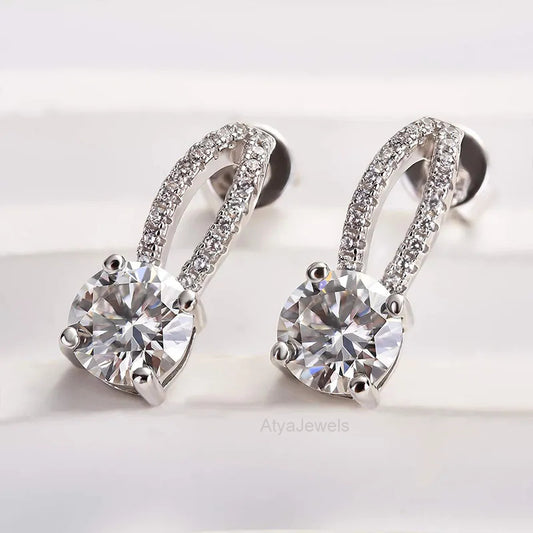
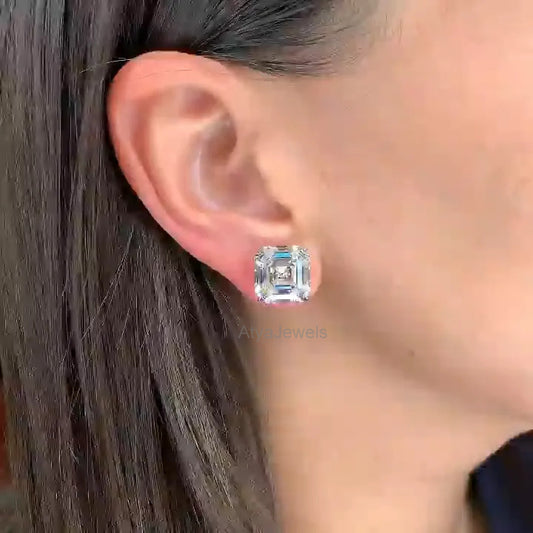
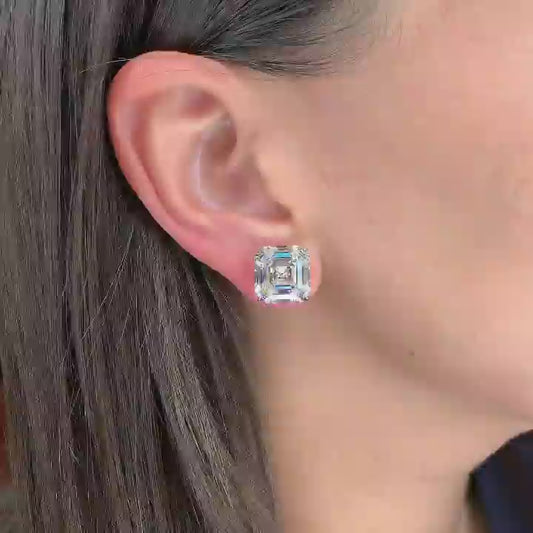
Specifications: 1.00 carat total weight, lab-grown diamonds, F color, VS2 clarity, 14k white gold, martini setting.
Typical price range: roughly 800 to 1,500 dollars.
Why this lands here: crossing the 1 carat total weight threshold increases per-carat pricing somewhat, and the higher color and clarity grades add a real, visible improvement in brightness over the budget example. This range represents the most frequently purchased diamond stud category.
Worked Example Three: Same Specification, Mined Instead of Lab Grown
Specifications: identical to example two, 1.00 carat total weight, F color, VS2 clarity, 14k white gold, martini setting, but mined diamonds instead of lab-grown.
Typical price range: roughly 3,000 to 5,500 dollars.
Why this lands here: this is the clearest illustration of origin's effect on price. Identical grades, identical setting, and the price gap is driven almost entirely by the mined stones' rarity and established supply chain, typically 60 to 80 percent higher than the lab-grown equivalent for the same specification.
Worked Example Four: Statement Halo Drops
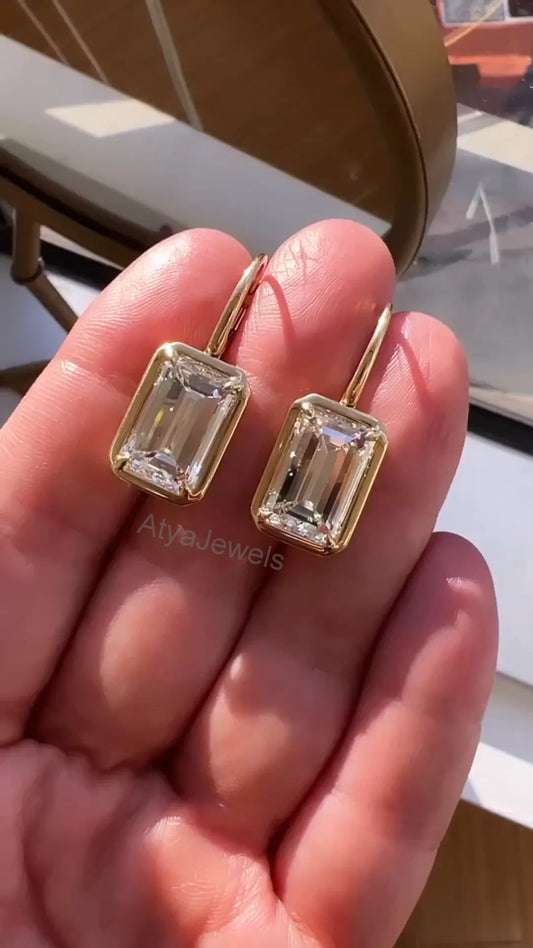
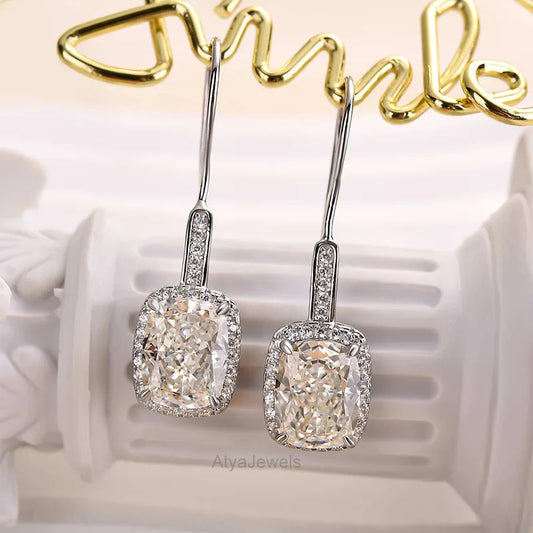
Specifications: 2.00 carat total weight combined across center stones and halo accents, lab-grown diamonds, G color, VS clarity, 18k gold, lever-back drop design.
Typical price range: roughly 2,000 to 3,500 dollars.
Why this lands here: the halo design uses more total diamond material and more intricate metalwork than a simple stud, and 18k gold's higher purity adds modest cost over 14k, but lab-grown origin keeps the overall price meaningfully below a comparable mined statement piece, which could easily run into five figures at this size.
What These Four Examples Teach
Laid side by side, a clear pattern emerges. Origin is the single biggest price lever, capable of moving the same specification by several thousand dollars. Total carat weight matters, but less dramatically than most buyers assume, since crossing from 0.50 to 1.00 carat total weight roughly doubles price rather than multiplying it further. Setting style and metal purity add real but comparatively modest cost on top of the stones themselves.
How to Use This Breakdown When You Actually Shop
Apply these four steps to any listing:
-
Confirm whether the stated carat weight is total (both earrings combined) or per stone, since this alone can double your assumed price
-
Check origin explicitly. A price that seems surprisingly low for its stated grades is often lab-grown rather than mined, and the listing should say so clearly
-
Compare the same specification across a few sellers before judging a price fair or unfair, since setting labour costs vary between makers
-
Factor in the setting style. Martini and halo designs typically add modest labour cost over a simple four-prong stud
Browsing a full range of diamond earrings with these four steps in mind turns price comparison from guesswork into a genuinely informed process.
Budgeting for a Complete Look, Not Just the Earrings
Diamond earrings rarely exist in isolation from the rest of a jewellery budget. Brides coordinating a full wedding look often plan earring spend alongside ring costs, whether that means an existing engagement rings purchase, a full bridal set wedding rings commission, or the groom's own wedding bands. Custom workshops such as Atya Jewels can also build earrings to a stated budget ceiling directly, adjusting carat weight or origin to hit a specific number rather than starting from a fixed design and hoping the price fits.
Price tags stop feeling arbitrary the moment you understand the formula behind them. Four factors, multiplied together, and every diamond earrings price on every page becomes a number you can actually explain to yourself.
Diamond Earrings Price FAQs
What does total carat weight mean for earring pricing?
The combined weight of both earrings, not each stone, a common source of price confusion.
Why are lab-grown diamond earrings so much cheaper?
They are chemically identical to mined diamonds but typically cost 60 to 80 percent less due to controlled production versus rarity.
Does setting style significantly affect price?
It adds real but modest cost compared to the stones themselves, with halo and drop designs costing more than simple studs.
How much should 0.50 carat total weight studs cost?
Roughly 300 to 600 dollars for lab-grown diamonds at commercial grades, more for mined equivalents.
Is 1 carat total weight a common size for diamond studs?
Yes, it is among the most frequently purchased sizes, balancing visible presence with accessible pricing.
Should I compare prices across multiple sellers?
Yes. Setting labour and markup vary, so comparing identical specifications across sellers reveals genuinely fair pricing.