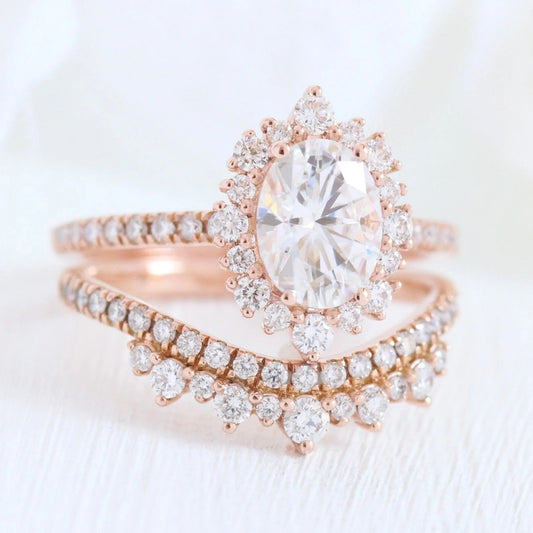
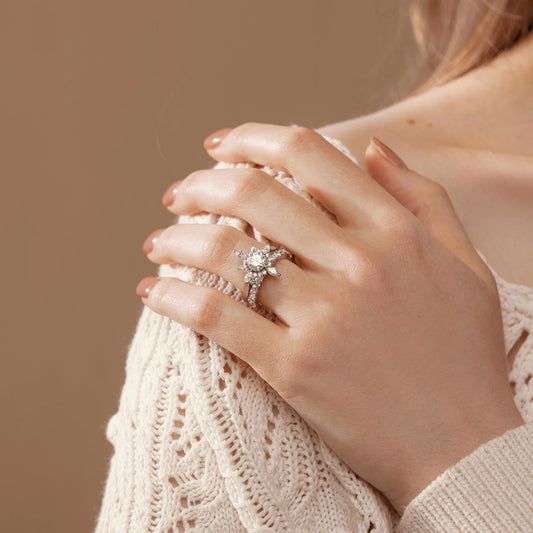
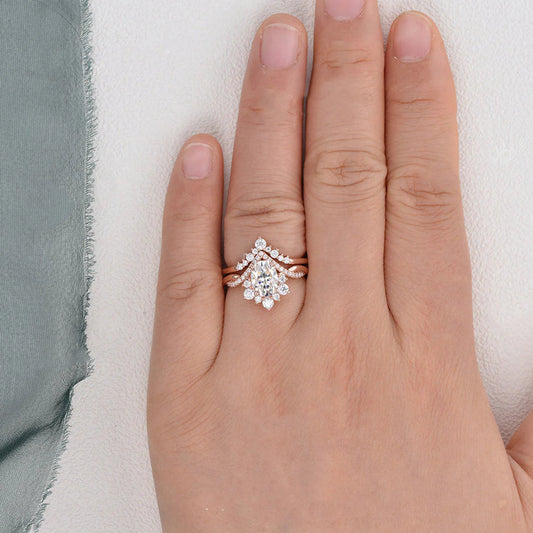
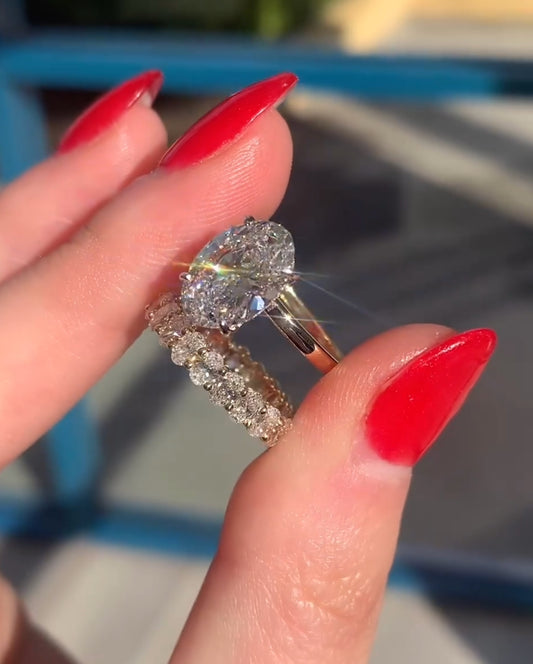
Bridal Wedding Ring Sets: A Budget Blueprint for Splitting Your Spend
Most budget advice for bridal wedding ring sets stops at one number: your total. It never tells you how to divide that number across the pieces you actually need. This is the missing piece: a practical blueprint for splitting a fixed budget sensibly across a set, so you finish with two well-made rings instead of one impressive one and one afterthought.
Start With the Total, Not the Pieces
Before splitting anything, fix your ceiling. A useful method: decide the absolute maximum you are comfortable spending without financing stress, then work backwards from there rather than pricing pieces individually and adding them up, which tends to creep upward with every added detail.
Once the ceiling is set, the blueprint below allocates it.
The 70-20-10 Blueprint for a Standard Set
For most couples buying a traditional bridal set, meaning an engagement ring and one wedding band, this rough split works well as a starting point:
-
70 percent: the engagement ring's center stone
-
20 percent: the engagement ring's setting and the wedding band together
-
10 percent: sizing, insurance, and a small buffer for the unexpected
Why the center stone gets the lion's share: it is the visual and emotional focus of the entire set, and cut quality specifically should never be the category you compromise to save money elsewhere. Comparing this allocation against real listings across a catalogue of engagement rings shows how the split plays out at different total budgets.
Adjusting the Blueprint for a Two-Band Set
Some couples buy matching bands for both partners as part of one coordinated purchase. In this case, the blueprint shifts slightly:
-
60 percent: the engagement ring's center stone
-
25 percent: both wedding bands combined
-
15 percent: sizing, insurance, and buffer
The reasoning here is straightforward. Two bands cost roughly double one, so the allocation needs headroom without eating into the center stone's share, since that stone remains the set's defining feature regardless of how many bands accompany it.
Where Buyers Overspend Without Realizing It
Three categories quietly eat budget more often than buyers expect, and knowing them in advance protects the blueprint.
Clarity above the eye-clean threshold is the most common overspend. Paying for internally flawless clarity in a stone under 2 carats is frequently invisible to the naked eye, yet it can consume 10 to 15 percent of a budget that could otherwise go toward cut quality or size.
Rush production fees appear when buyers finalize a design too close to a proposal or wedding date. Custom or made-to-order pieces typically need four to eight weeks; compressing that timeline often adds a premium that a little earlier planning avoids entirely.
Unmatched separate purchases cost more collectively than a true set. Buying an engagement ring and a wedding band from different collections, at different times, often means paying full retail twice, where a coordinated bridal set wedding rings purchase frequently prices below the sum of its separate parts.
Where Smart Buyers Reclaim Budget
Three levers reliably free up meaningful money without visibly compromising the set.
Origin choice is the single biggest lever available. Lab-grown diamonds are chemically identical to mined diamonds, typically priced 60 to 80 percent lower at equal grades, and moissanite offers a distinct gemstone alternative at an even lower price point. Redirecting the savings from origin choice into cut quality or a slightly larger stone almost always produces a more impressive result than the mined equivalent at the same total price.
Buying just under round carat marks, such as 0.90 instead of 1.00, often saves a noticeable percentage with no visible size difference, since jump-in pricing tends to cluster right at whole numbers.
Choosing a metal wisely also matters. Yellow and rose gold need no ongoing maintenance cost, while white gold requires periodic rhodium replating every one to three years, a small recurring expense worth factoring into a long-term budget comparison, particularly against wedding bands considered for daily decades-long wear.
A Worked Example
Say your total ceiling is 4,000 dollars for a standard engagement ring and single wedding band set.
Using the 70-20-10 blueprint:
-
2,800 dollars toward the center stone, likely a well-cut lab-grown diamond in the 1 to 1.3 carat range at eye-clean clarity and near-colorless grading
-
800 dollars toward setting and band, comfortably covering a solid 14k gold six-prong solitaire mounting and a matching curved band
-
400 dollars held for sizing, a basic insurance policy, and any final adjustments
This is only a starting framework, not a rigid formula. Couples prioritizing size over setting detail, or vice versa, can shift the percentages while keeping the underlying discipline: fix the total first, protect the center stone's share, and build in a genuine buffer rather than spending to the exact edge of the ceiling.
Completing the Full Bridal Budget
The rings are usually the largest single jewelry expense of a wedding, but rarely the only one. A modest allocation for coordinating pieces, such as a pair of diamond earrings worn on the wedding day, is worth folding into the overall jewellery budget from the start rather than treating as a separate surprise expense later. Custom workshops, including Atya Jewels, can also work directly within a stated total budget, building a set specifically engineered around a fixed number rather than a wish list that grows past it.
A budget blueprint only works if you follow it under pressure, in the store or on the page, when a slightly bigger stone or a slightly fancier setting tempts you past your allocated share. Write the percentages down before you start shopping, and let them do the disciplining for you.
Bridal Wedding Ring Sets FAQs
How should I split my budget across an engagement ring and wedding band?
A common starting point is roughly 70 percent to the center stone and 20 percent to setting and band, with 10 percent held in reserve.
Is buying a matched set cheaper than buying separately?
Often yes, since sets are typically priced as a coordinated package rather than two full retail purchases.
What is the biggest hidden budget drain in bridal sets?
Paying for clarity grades above eye-clean, which is frequently invisible in the finished ring.
Does choosing lab-grown diamonds really save significant money?
Yes, typically 60 to 80 percent less than mined diamonds at equivalent grades.
Should I include insurance in my bridal set budget?
Yes. A small reserve, often around 10 percent of total spend, comfortably covers sizing and basic insurance costs.
Is it cheaper to buy both partners' wedding bands together?
Usually, since bundled purchases from one collection often price better than two separate transactions.