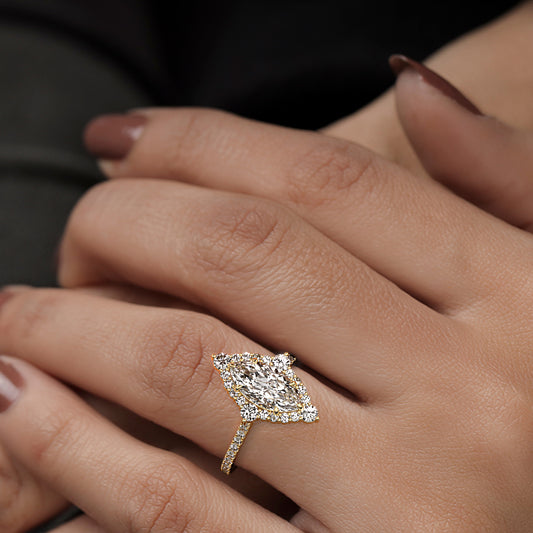
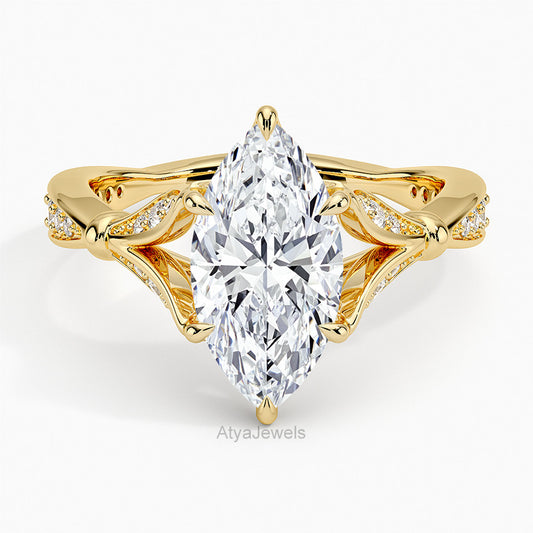
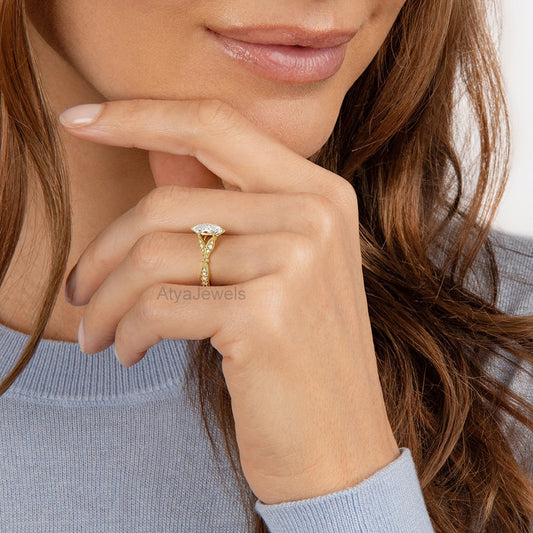
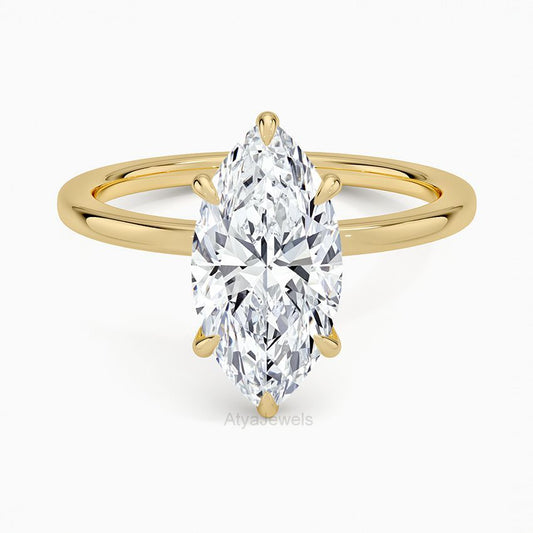
Marquise Engagement Ring: Why This Elongated Cut Delivers 15% More Visual Size in 2026
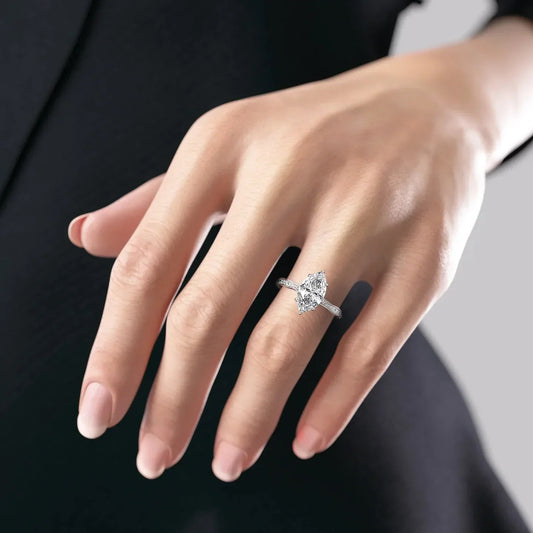
Marquise engagement rings combine vintage heritage with modern sophistication—and they're experiencing explosive growth in 2026. The marquise diamond ring offers 15% more visual "face-up" size than traditional round cuts, providing a high-impact look that aligns with the current value-conscious economic climate. Whether you're drawn to their flattering elongated shape or their distinctive character, this guide covers everything you need to know before buying, including lab-grown options, setting styles, and real pricing at explore Atya jewels.
Why Marquise Rings Are Dominating 2026: Market Momentum & Buyer Psychology
Marquise engagement rings came in at 8 per cent in The Knot's 2026 study, alongside emerald and pear cuts, but the real story is the growth trajectory. The shapes that have increased the most in popularity over the past year are emerald, marquise, and the elongated cushion cut.
This isn't nostalgia—it's a fundamental shift in buyer values. Marquise engagement rings match several wider design movements at once. Buyers want more individuality, more visible craftsmanship and less of the one-style-fits-all look that dominated social media for years. Marquise answers that shift very well because its proportions, setting style and orientation all change the feel of the ring dramatically.
Celebrity visibility accelerated the trend. Marquise engagement rings have been slowly trending upwards over the years, but this shape shot into the spotlight following Selena Gomez's engagement to Benny Blanco. Benny proposed with a custom ring featuring a marquise diamond, estimated at a 6-8 carat weight.
Key buyer motivations in 2026:
- Elongated shapes that visually lengthen the finger and appear larger per carat
- A distinctive character that stands out in a market saturated with rounds and ovals
- Vintage heritage combined with contemporary setting flexibility
- Strong value proposition for budget-conscious couples seeking a premium appearance
At Atyajewels, marquise lab-grown and moissanite options deliver this exact combination—distinctive elegance without the premium price tag of mined diamonds.
Marquise Cut Specifications: What Makes the Shape Unique
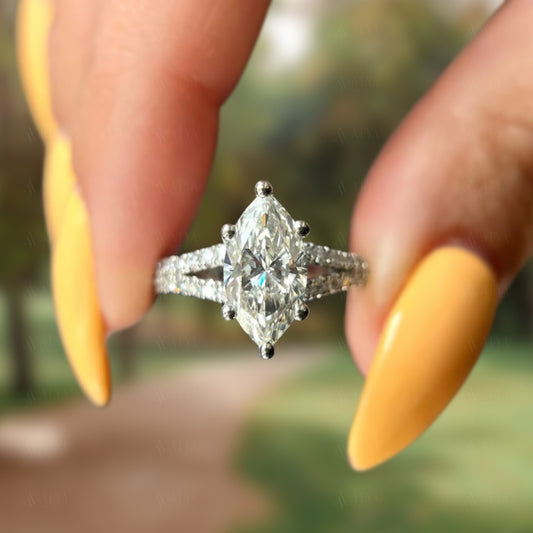
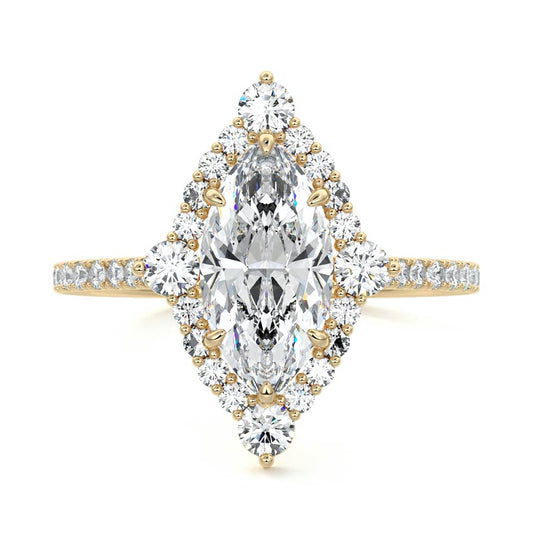
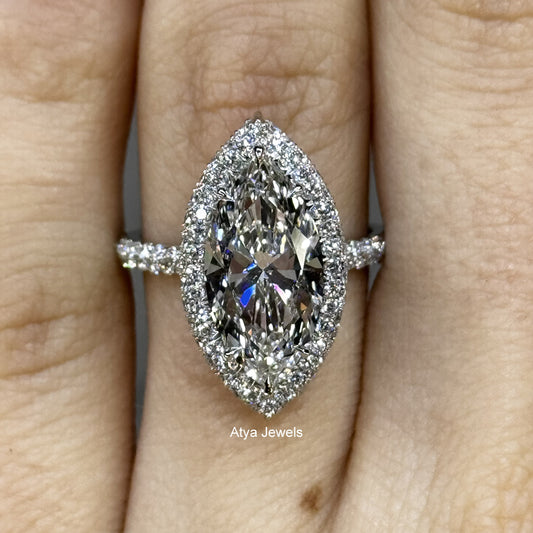
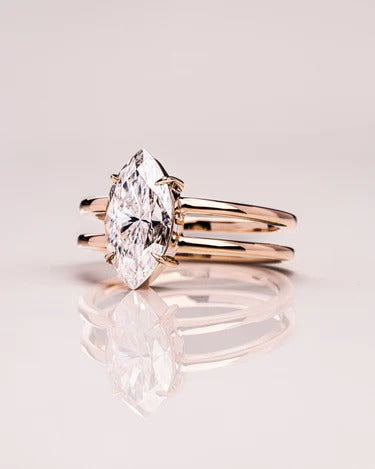
What sets the marquise engagement ring apart from traditional cuts is the unique "navette" or boat shape construction. Other cuts almost always feature flat edges, while the marquise has two pointed edges with a clean, elongated centre.
Understanding the geometry matters for your buying decision. The marquise's elongated proportions create optical illusions that work in your favour:
-
Length-to-width ratio: Ideal marquise cuts maintain a 1.75:1 to 2.25:1 ratio. Anything narrower looks pinched; anything wider loses the signature elegance.
-
Bow effect: The slight curve in the centre (called the "bow") should be subtle, not exaggerated. A pronounced bow reduces light return and makes the stone look less brilliant.
-
Point symmetry: Both pointed ends must align perfectly. Asymmetrical points are a red flag—they indicate poor cutting and will be visible to the naked eye.
-
Depth percentage: Aim for 58–62% depth. Deeper cuts (over 65%) trap light and appear darker; shallower cuts (under 55%) lose sparkle.
Clarity considerations for marquise cuts:
The elongated shape makes inclusions more visible than in round brilliants. Not if they are well cut. Their light return differs from that of round brilliant diamonds, but a strong marquise should still look bright and lively. Target VS1 clarity minimum for natural diamonds; lab-grown options at Atyajewels often achieve VVS2 or higher at comparable price points.
Colour grading:
Marquise cuts show colour more readily than rounds because of their larger table facet. For natural diamonds, aim for H colour or better. Lab-grown diamonds at Atyajewels frequently offer D-F colour grades at mid-range pricing, giving you superior colour without the cost premium.
Lab-Grown vs. Natural Marquise Diamonds: The 2026 Value Equation
The UK market has seen a massive embrace of lab-grown marquise diamond options. These stones are physically, chemically, and optically identical to mined diamonds. For a buyer in London or Edinburgh, this means a higher clarity and colour grade is achievable within a standard wedding budget.
This advantage applies globally. Here's the practical breakdown:
|
Factor
|
Natural Marquise
|
Lab-Grown Marquise
|
|
Price per carat
|
$3,500–$8,000+
|
$800–$2,200
|
|
Typical clarity
|
VS1–SI1
|
VVS2–IF
|
|
Typical color
|
H–J
|
D–F
|
|
Certification
|
GIA, AGS
|
GIA, IGI
|
|
Resale value
|
50–60% of the purchase
|
20–30% of the purchase
|
|
Ethical sourcing
|
Variable
|
Transparent, renewable energy
|
For a 2-carat marquise, natural diamonds typically cost $7,000–$16,000. Lab-grown equivalents at Atyajewels range $1,600–$4,400—a 70–75% savings while maintaining identical optical properties and GIA certification.
The real decision rule: If you plan to keep the ring forever and value ethical sourcing, lab-grown wins on value and transparency. If resale matters, natural diamonds hold slightly more secondary market value—but the difference rarely justifies the 3–4x price premium.
Atyajewels specializes in customized lab-grown marquise rings, allowing you to explore engagement rings with precise specifications and transparent pricing.
Setting Styles That Maximize Marquise Beauty: East-West, Bezel & Solitaire
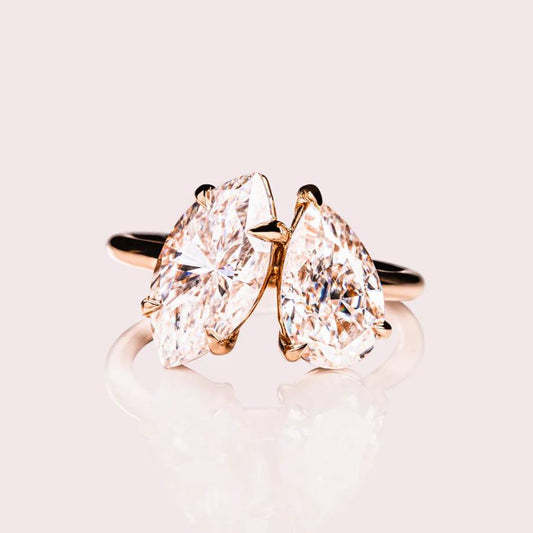
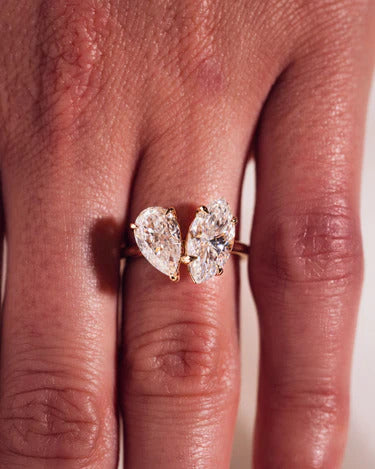
Marquise engagement ring trends in 2026 will be focused on "East-West" horizontal orientation designs, the Toi et Moi multi-stone rings, and mixed metal ring bands. Trends for this shape will include horizontal East-West settings, protective minimalist bezels, and a growing emphasis on lab-grown diamonds in the UK's luxurious market.
East-West orientation (horizontal setting):
East–West engagement rings—where the centre stone is set horizontally instead of vertically—are trending for their modern, minimalist feel. This unexpected orientation transforms classic cuts like emerald, oval, and marquise into sleek, contemporary silhouettes that feel fresh and ultra-stylish. Brides love how an East–West setting elongates the finger, adds visual interest, and stands out with subtle sophistication.
East-West marquise rings work especially well because the horizontal orientation emphasizes the stone's elongated geometry. The setting feels architectural and unexpected—exactly what 2026 buyers want.
Bezel settings for security and modern aesthetics:
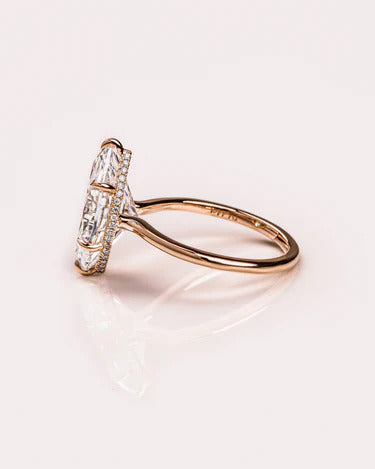
Bezel engagement ring settings remain a dominant trend in 2026, offering a sleek and modern way to highlight diamonds while providing maximum protection. Unlike traditional prong settings, a bezel encircles the diamond with a thin metal rim, securing it firmly in place and enhancing its silhouette. This setting is especially popular among those with active lifestyles, as it minimizes the risk of snagging and protects the diamond from damage.
For marquise cuts, half-bezel settings (which frame the sides while leaving the top open) balance security with light return. Full bezels create a more contemporary, minimalist look.
Classic solitaire with pavé band:
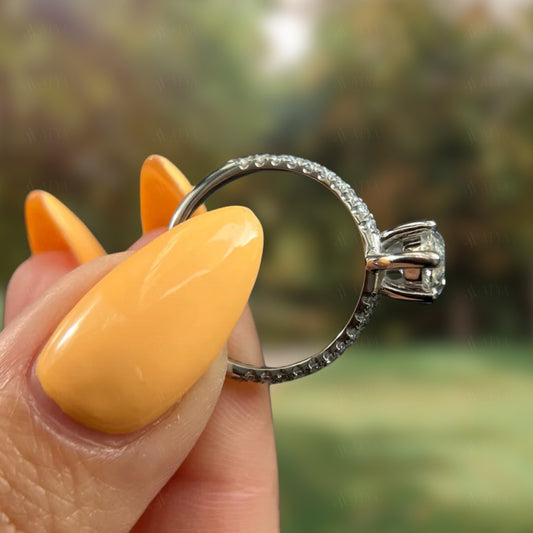
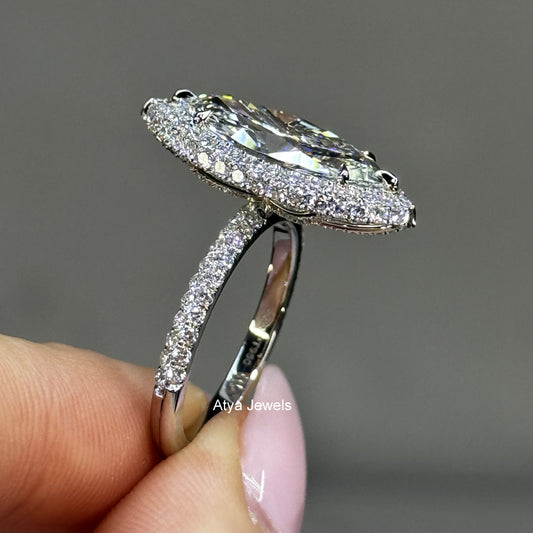
The traditional approach—a marquise solitaire on a simple band—remains timeless. Adding a pavé band (small diamonds set along the band) creates visual continuity and amplifies sparkle without overwhelming the centre stone. This is the most versatile option for everyday wear.
Metal choices that matter:
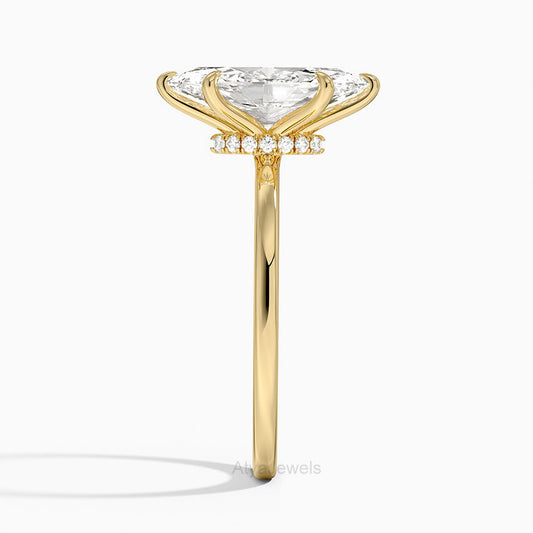
Yellow gold gives marquise warmth and a slightly more romantic, vintage feel. Platinum and white gold usually make the overall look crisper and more contemporary. Neither is automatically better; it depends on whether you want softness or sharpness in the finished design.
At Atyajewels, you can customize your marquise ring with any metal combination, including mixed-metal designs that blend yellow and white gold for a modern, personalized aesthetic.
Moissanite Marquise Rings: Brilliance, Durability & Real-World Performance
Moissanite offers a compelling alternative to diamonds for marquise engagement rings. Unlike lab-grown diamonds (which are chemically identical to natural diamonds), moissanite is silicon carbide—a different material with distinct optical properties.
Why moissanite works for marquise cuts:
The marquise's elongated shape actually showcases moissanite's strengths. The multiple facets create a balanced sparkle profile that doesn't emphasize the "rainbow fire" that some find distracting in round moissanite stones. The pointed ends and curved sides of a marquise distribute light more evenly.
Durability comparison:
Both lab-grown diamonds and moissanite rank 9.25 on the Mohs hardness scale (diamonds are 10). For everyday wear, both are virtually indestructible. Moissanite is slightly more resistant to scratching, though both require professional cleaning every 1–2 years to maintain brilliance.
Optical differences:
Modern moissanite (especially premium grades) shows minimal color dispersion compared to earlier versions. In marquise cuts, this is less noticeable than in round stones because the facet pattern breaks up light differently. If you're sensitive to "rainbow" effects, a lab-grown diamond delivers more traditional diamond optics.
Pricing advantage:
A 2-carat moissanite marquise typically costs $400–$900, compared to $1,600–$4,400 for lab-grown diamond equivalents. This 75–80% savings makes moissanite ideal for couples prioritizing budget flexibility or wanting to allocate funds to setting design and customization.
Atyajewels offers both lab-grown and moissanite marquise options with full customization. Wedding Bands can be paired with your marquise center stone for a coordinated bridal set.
Pricing Breakdown: What You Actually Pay for Marquise Rings in 2026
Marquise ring pricing depends on four variables: stone type (natural, lab-grown, or moissanite), carat weight, quality grades, and setting metal.
Natural marquise diamond pricing (GIA certified):
|
Carat Weight
|
Color (H)
|
Clarity (VS1)
|
Price Range
|
|
1.0 ct
|
H
|
VS1
|
$3,500–$5,200
|
|
1.5 ct
|
H
|
VS1
|
$5,800–$8,900
|
|
2.0 ct
|
H
|
VS1
|
$7,200–$12,000
|
|
2.5 ct
|
H
|
VS1
|
$9,500–$16,500
|
Lab-grown marquise diamond pricing (GIA certified):
|
Carat Weight
|
Color (D–F)
|
Clarity (VVS2)
|
Price Range
|
|
1.0 ct
|
D–F
|
VVS2
|
$800–$1,400
|
|
1.5 ct
|
D–F
|
VVS2
|
$1,200–$2,100
|
|
2.0 ct
|
D–F
|
VVS2
|
$1,600–$2,800
|
|
2.5 ct
|
D–F
|
VVS2
|
$2,000–$3,600
|
Setting costs (metal + labor):
- Simple solitaire (white/yellow gold): $400–$800
- Solitaire with pavé band: $600–$1,200
- Bezel setting: $500–$1,000
- East-West setting: $700–$1,400
- Platinum settings: add 20–30% to gold pricing
Total ring cost examples:
- 1.5-carat lab-grown marquise + solitaire setting in 14K gold: $1,800–$3,300
- 2.0-carat natural marquise + pavé band in white gold: $7,800–$13,200
- 1.0-carat moissanite marquise + bezel setting in platinum: $1,200–$2,400
At Atyajewels, you can explore engagement rings with transparent pricing and no hidden fees. Custom designs are quoted based on your exact specifications—stone type, carat weight, metal choice, and setting style.
Frequently Asked Questions
Q1. What's the difference between a marquise and an oval engagement ring?
Marquise has two pointed ends and a curved center; oval is rounded at both ends—marquise is more dramatic and vintage-feeling, while oval is softer and more contemporary.
Q2. Are marquise diamonds more prone to chipping at the points?
The pointed ends are slightly more vulnerable than rounded shapes, but modern bezel and East-West settings protect them effectively for everyday wear.
Q3. Do lab-grown marquise diamonds look identical to natural diamonds?
Yes—lab-grown diamonds are chemically, physically, and optically identical to natural diamonds; only specialized equipment can distinguish them.
Q4. What's the ideal length-to-width ratio for a marquise cut?
The ideal ratio is 1.75:1 to 2.25:1; anything narrower looks pinched, and anything wider loses the signature elegant proportions.
Q5. Can I wear a marquise engagement ring every day?
Yes, marquise rings are durable for daily wear, especially in bezel or East-West settings that protect the pointed ends.