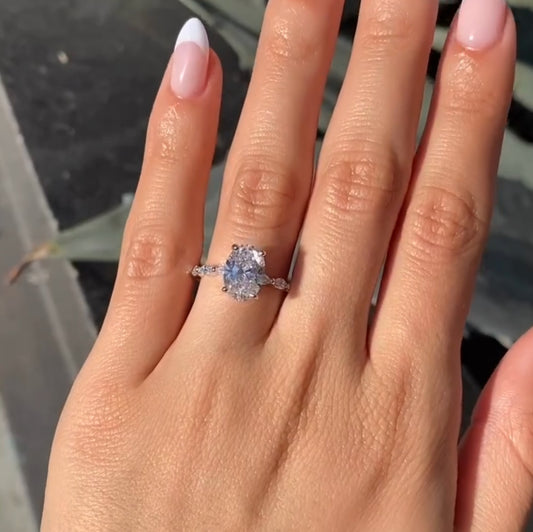
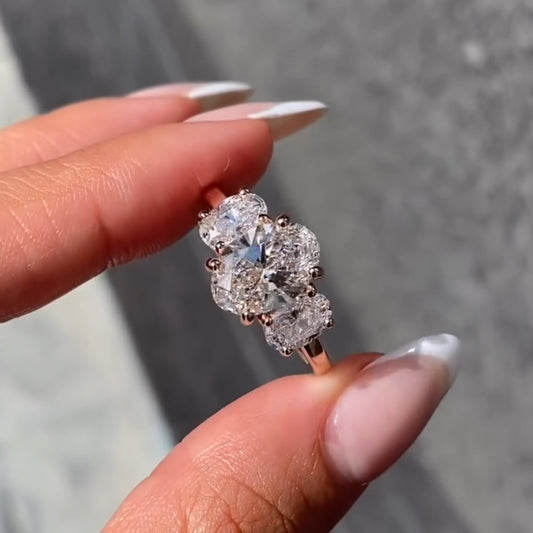
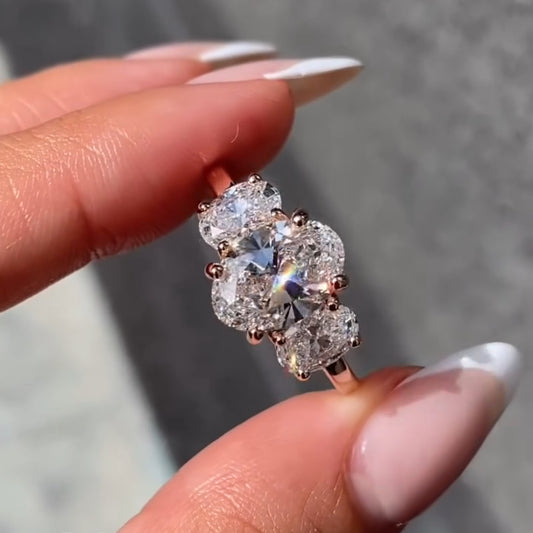
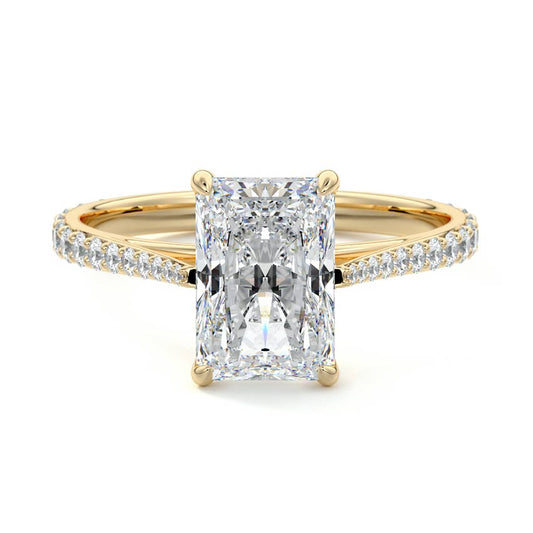
Anatomy of an Engagement Diamond Ring for Women: Read Any Ring Like a Jeweller
Product pages for fine jewellery are written in a foreign language. Head, shank, gallery, culet, melee. If you cannot read the language, you cannot compare rings, and if you cannot compare, you overpay. This article is a translation dictionary. By the end, every engagement diamond ring for women you look at will disassemble itself into understandable parts before your eyes.
We will dissect the ring from top to bottom, the way a jeweller examines one.
The Centre Stone: The Engine of the Ring
Everything else exists to hold and flatter this component.
Key terms you will meet:
- Table: the flat top facet, the window into the stone
- Crown: the sloped upper section between the table and the girdle
- Girdle: the stone's outer edge, where prongs grip
- Pavilion: the lower cone that bounces light back up
- Culet: the tiny point at the very bottom
Why it matters when buying: light enters the table, reflects inside the pavilion, and exits back through the crown as sparkle. Cut proportions govern this entire journey, which is why cut grade outranks color and clarity for real-world beauty. A depth that is too deep or shallow "leaks" light out the bottom, and no clarity grade can rescue it.
Origin belongs here too: mined and lab-grown diamonds share this identical anatomy, with lab-grown stones typically costing 60 to 80 per cent less at matching grades.
The Head: The Component Everyone Forgets to Inspect
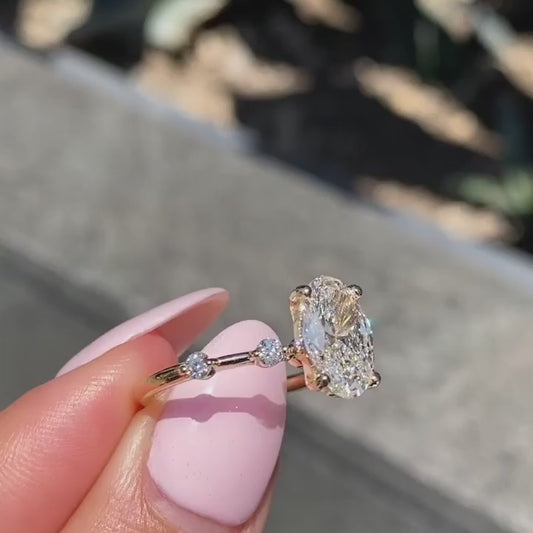
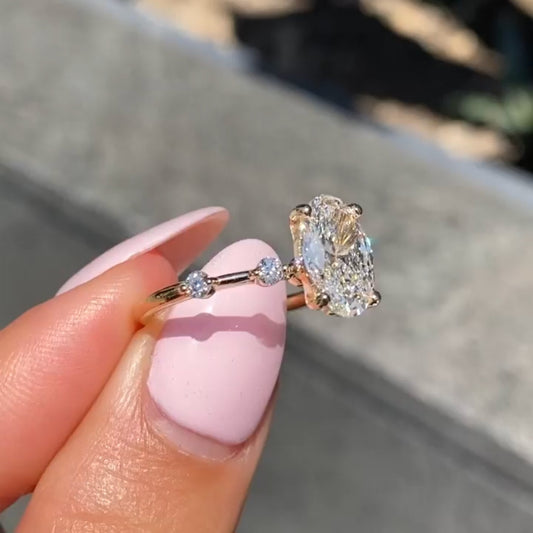
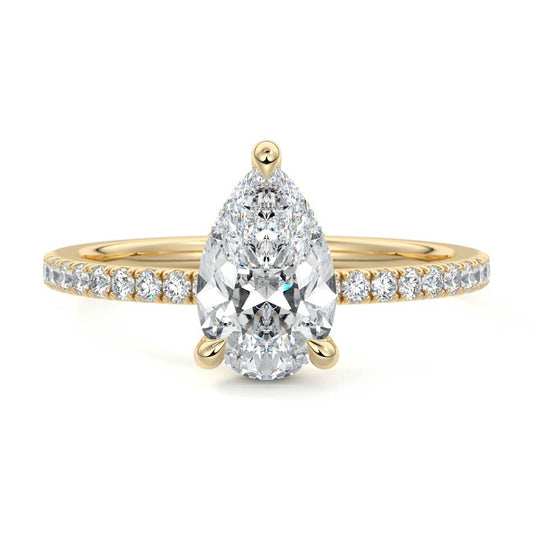
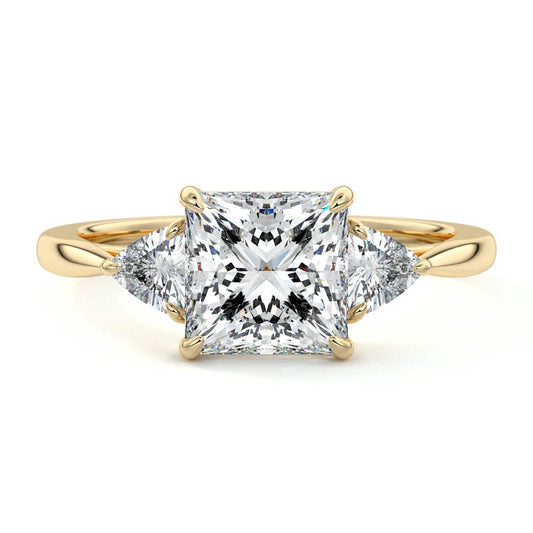
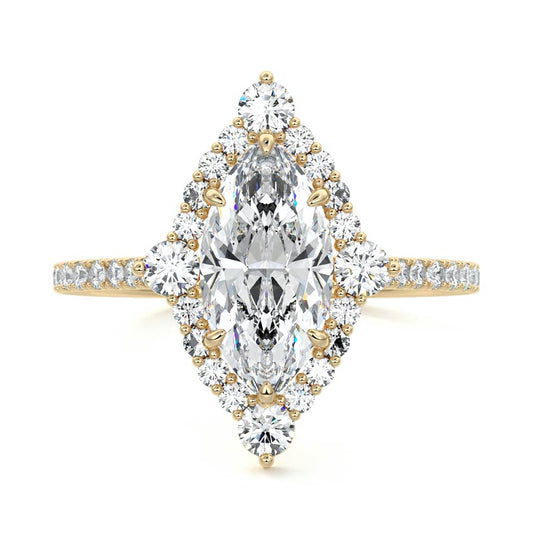
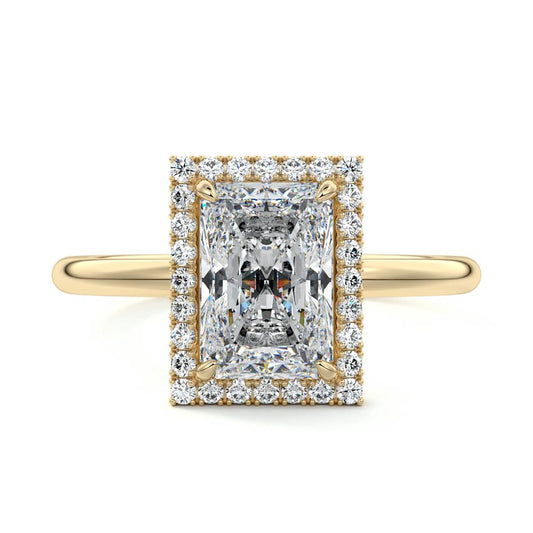
The head, or basket, is the small metal structure that actually holds the centre stone.
- Prongs: the metal claws. Four show more stone; six hold more securely
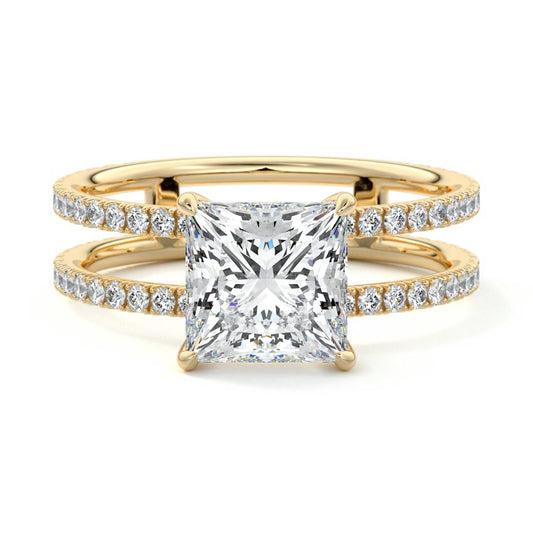
- V-prongs: corner-protecting prongs essential for princess and pear points
- Bezel: a full metal rim replacing prongs entirely, the security champion
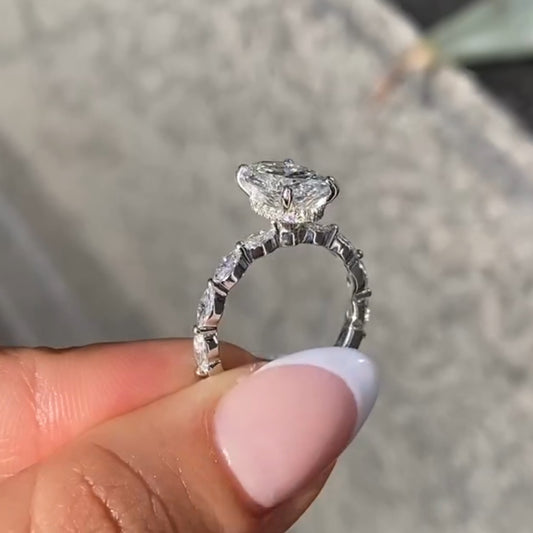
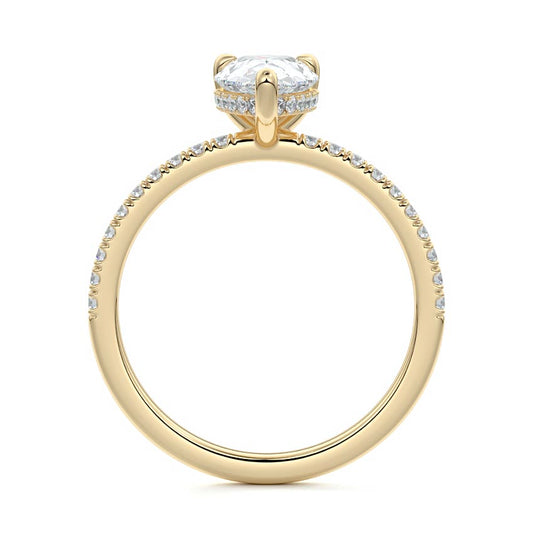
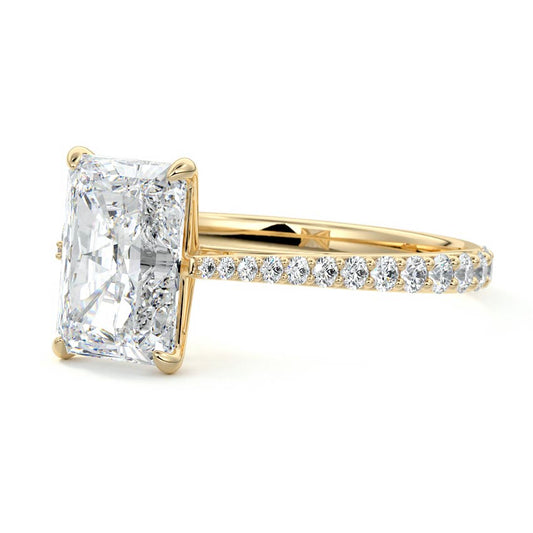
- Basket: the cage beneath the stone, visible from the side
- Peg head: a replaceable head welded onto the band, useful for future upgrades
Why it matters when buying: the head is the ring's most common failure point. On any product photo, zoom in on the prong tips. They should be rounded, even, and substantial. Thin, pointy prongs snag sweaters and wear down within years.
The Gallery and Shoulders: Where Design Lives
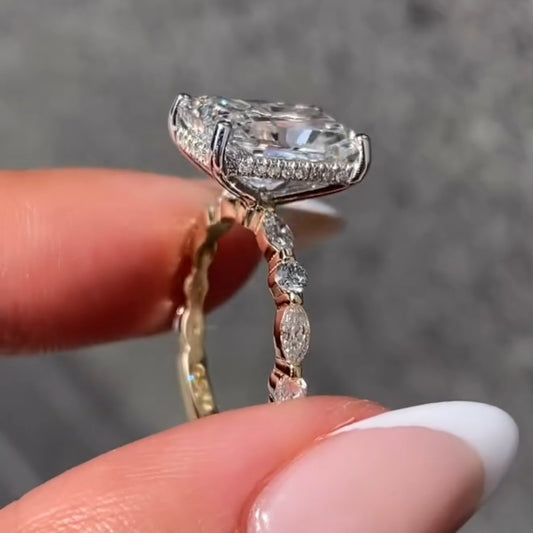
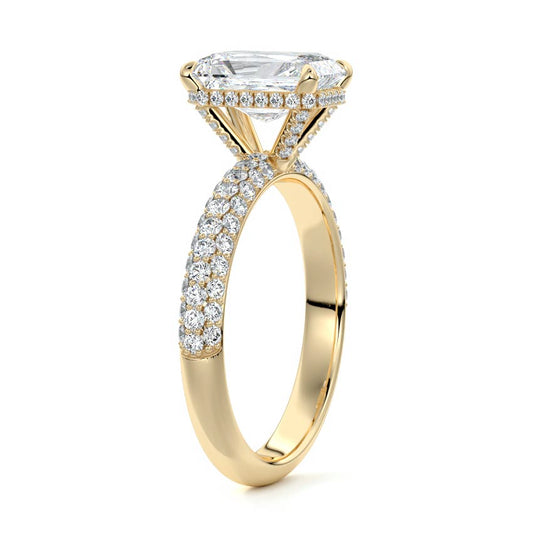
The gallery is the openwork area beneath the stone visible in profile; the shoulders are the upper parts of the band rising toward the head.
This zone carries the ring's personality: cathedral arches, hidden halos, engraved scrollwork, or tiny surprise stones. Two identical stones in identical heads can look wildly different because of the gallery design alone. Browsing side profiles, not just top-down photos, across a collection of engagement rings reveals more about craftsmanship than any specification sheet.
Why it matters when buying: profile height determines glove-friendliness, knock resistance, and how the ring stacks. A low gallery suits daily-wear practicality; a high gallery maximizes light and drama.
The Melee: The Small Stones With a Big Job
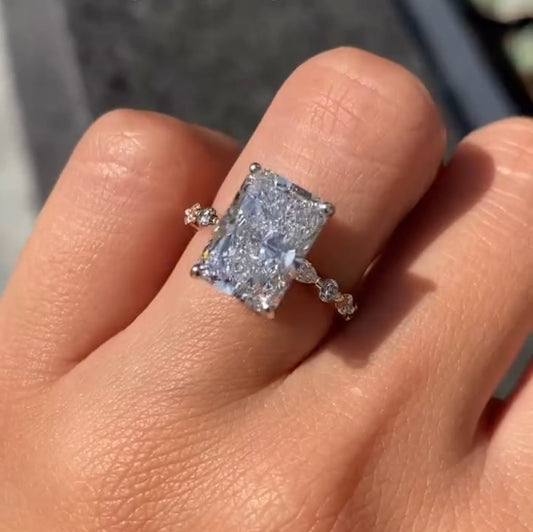
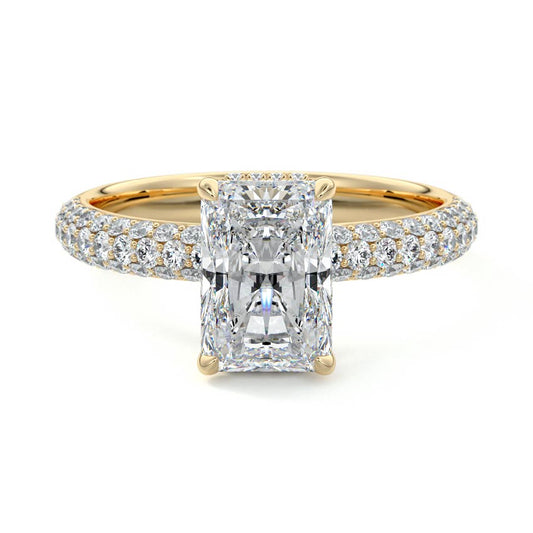
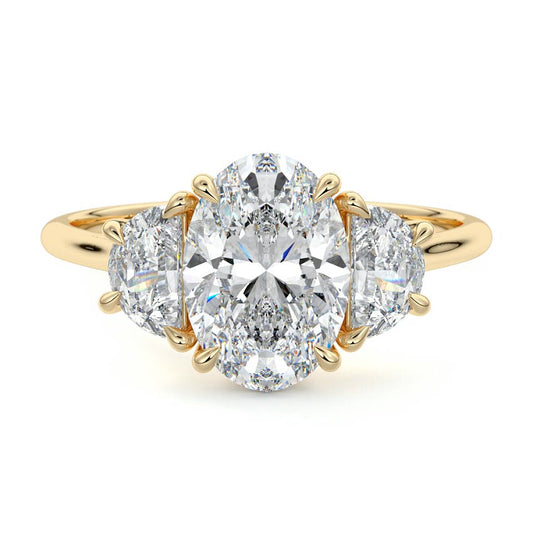
Melee (pronounced meh-lee) are the tiny accent diamonds, usually under 0.20 carats each, that populate halos, pave bands, and side-stone settings.
- Pave: melee set into the band's surface with tiny beads of metal
- Channel: melee held between two rails, smooth and snag-free
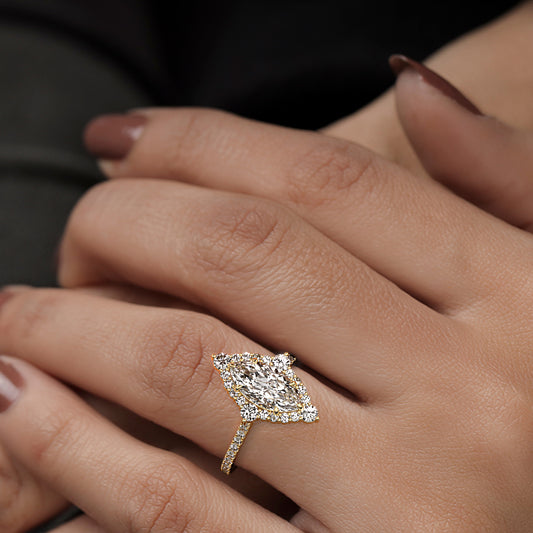
- Halo: a border of melee encircling the centre stone, adding up to a visual carat of perceived size
Why it matters when buying: melee quality is where inferior rings hide their cost cuts. Mismatched melee color or sloppy pave betrays a ring instantly at close range. Reputable makers match melee to the centre stone's color grade; Atya Jewels, for instance, specifies accent stone grading on custom work, and that is the transparency standard to demand anywhere.
The Shank: The Part She Feels All Day
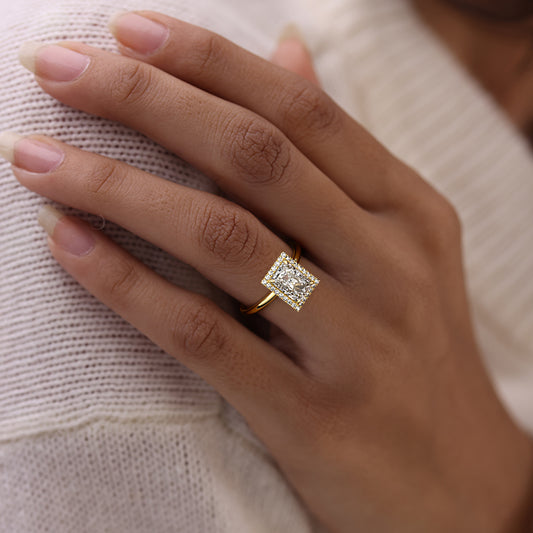
The shank is the band itself, and comfort lives or dies here.
- Width: 1.6 to 2.5 mm is typical; thinner amplifies the centre stone visually
- Profile: comfort-fit shanks are rounded inside and feel noticeably better over 16-hour days
- Taper: shanks that narrow toward the stone draw the eye upward
- Metal: 14k gold for durability, 18k for richness, platinum for density, each in white, yellow, or rose
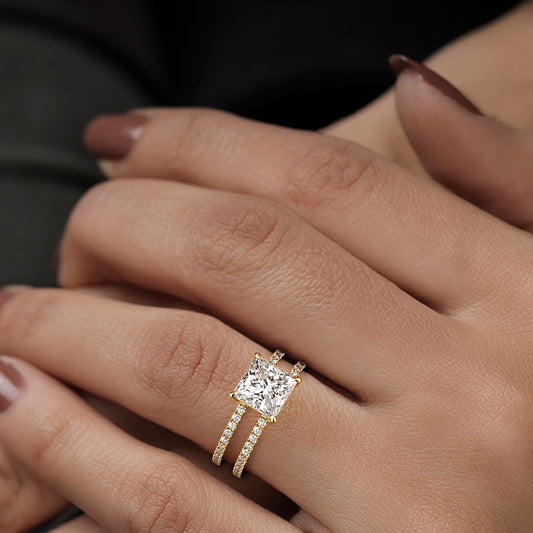
Why it matters when buying: the shank takes all resizing, so intricate full-way-around detail limits future adjustments. It also determines wedding stack fit; straight shanks pair with standard bands, while high or wide heads may need curved partners. Checking compatible wedding bands at purchase time, or choosing pre-engineered bridal set wedding rings, prevents the most common post-wedding annoyance in jewellery.
The Full Inspection Routine
Armed with the vocabulary, run this five-point check on any candidate ring:
- Table and crown: crisp facets, strong light return in video
- Prong tips: even, rounded, substantial
- Profile: gallery height matches her lifestyle
- Melee: matched color, tidy setting, work
- Shank: comfort-fit interior, resizable design, stack-compatible shape
Complete the picture with certification for the centre stone and a written resize policy, and you have out-inspected the average buyer by a wide margin. The same anatomical eye transfers to every future purchase, from anniversary bands to the prong work on diamond earrings, because good construction looks the same at every scale.
A ring is a small machine worn for fifty years. Buy it like one.
Engagement Diamond Ring FAQs
Q1. What are the main parts of an engagement ring?
Centre stone, head with prongs, gallery, shoulders, accent melee stones, and the shank or band.
Q2. How many prongs are best?
Six for maximum security on rounds; four for more visible stone; V-prongs for pointed shapes.
Q3. What is a hidden halo?
A circle of tiny diamonds set beneath the centre stone, visible only from the side.
Q4. What width should the band be?
Most women's engagement bands run 1.6 to 2.5 mm; thinner bands make centre stones look larger.
Q5. What are melee diamonds?
Small accent diamonds under about 0.20 carats are used in halos, pavé, and side settings.
Q6. Why does comfort-fit matter?
The rounded interior edge dramatically improves all-day wearability, especially for wider bands.