
-
(90)
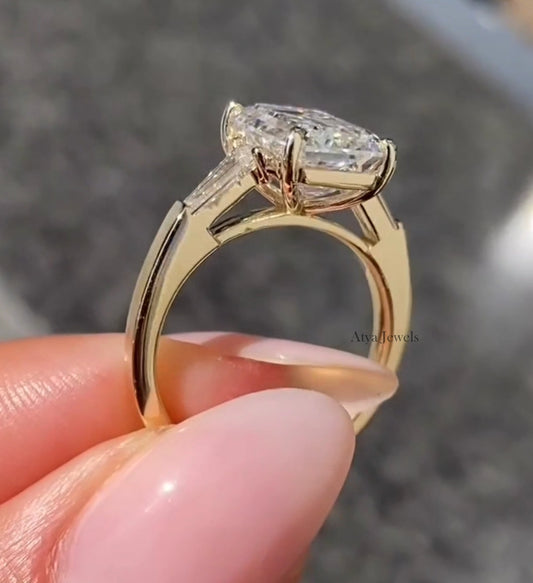
3.00 CT Emerald Cut Moissanite Three...
4.9 / 5.0
(10) 10 total reviews
Regular price $278.33 USDRegular price $278.33 USDUnit price / per$347.91 USDSale priceSale

Baby Diamond Earrings
Baby Diamond Earrings: What Parents Actually Ask Before Piercing and Buying
Choosing earrings for a baby is not the same decision as choosing them for anyone else, and it deserves a different kind of guide. This article is organized around the real questions parents ask, and it leans deliberately cautious throughout, because safety and medical guidance here should come primarily from a paediatrician or a licensed professional piercer, not from a jewellery buying guide. Consider this a starting point for the conversation, not a substitute for it.
"Is baby ear piercing safe?"
This is a personal, cultural, and medical decision, and practices vary significantly by family, culture, and country. Some families pierce ears in infancy as a longstanding tradition; others wait until a child is older and can participate in the decision. There is no single universally correct age or approach, and any decision about piercing itself should involve a conversation with a paediatrician, who can advise based on the individual child's health and circumstances, and a piercing performed by a trained, licensed professional using sterile, appropriate equipment.
This guide does not make a recommendation on timing or whether to pierce at all. That decision belongs to the family, ideally in consultation with a medical professional.
"What should I ask a paediatrician before deciding?"
Useful questions to bring to that conversation include:
-
Is there any reason specific to my child's health that would suggest waiting
-
What aftercare and healing timeline should we expect
-
Are there specific hygiene practices recommended during healing
-
How should we watch for signs of irritation or infection during the healing period
A paediatrician's guidance should take priority over any general information found online, including this article.
"What material should baby earrings be made from?"
If a family has decided to proceed with piercing, on a professional's advice, material choice becomes an important practical consideration for minimizing irritation risk.
Commonly recommended qualities to look for:
-
Solid, nickel-free gold, typically 14k or higher, or surgical-grade materials specifically designed for initial piercings, since nickel is the most common trigger for metal sensitivity
-
Smooth, rounded settings with no sharp edges or protruding elements that could catch or scratch
-
Lightweight construction, since even small amounts of extra weight matter more on a very young child's earlobe
Always confirm material specifications directly with a piercing professional or paediatrician rather than relying solely on product descriptions, since individual sensitivity varies by child.
"What backing style is safest?"
Secure, tamper-resistant backs are a significant practical consideration for infants and young children, since safety in this context is less about jewellery aesthetics and more about preventing a back from loosening or an earring from being pulled out or swallowed.
Options generally considered more secure for this age group:
-
Screw backs, which thread securely onto the post and resist casual removal
-
Locking or safety backs, designed specifically to require deliberate effort to open
A licensed piercer or paediatrician can advise on the specific backing approach most appropriate during the healing period and beyond, since recommendations can vary based on the child's age and individual circumstances.
"Should baby earrings have diamonds at all, or something simpler?"
Many professionals recommend simple, plain studs for the initial piercing and healing period specifically, since simplicity supports easier cleaning and monitoring during healing. A diamond or other stone-set pair is often considered only after healing is complete, as a later purchase rather than the first piece worn.
If choosing a diamond pair at that later stage, very small stones, generally under a tenth of a carat, in a smooth, low-profile setting minimize both weight and snag risk. Comparing later-stage options across a broader range of diamond earrings can help once healing is confirmed complete, and a professional has given clearance for a stone-set pair.
"How do I care for a baby's ears and earrings during healing?"
General aftercare commonly recommended by piercing professionals includes gentle cleaning as directed, avoiding unnecessary touching of the area, and monitoring closely for redness, swelling, or discharge that might indicate irritation or infection, in which case a paediatrician should be consulted promptly. Specific aftercare instructions should always come directly from the professional who performed the piercing, since practices can vary.
"What if we decide to wait instead?"
Waiting is an entirely valid and common choice. Many families choose to let a child participate in the decision once old enough to express a preference, sometimes marking a later milestone, a birthday or a specific age, as the moment for a first piercing instead. There is no medical or practical requirement to pierce in infancy, and choosing to wait carries no disadvantage.
A Note on This Guide's Limits
This article is intended as a starting point for questions to raise with qualified professionals, not as medical or safety guidance in itself. Every recommendation here should be confirmed directly with a pediatrician and a licensed piercing professional before any decision is made, since individual circumstances, local regulations, and a child's specific health profile all matter more than general information.
Families further along in this journey, once decisions are made and healing is complete, sometimes go on to build a broader family jewellery story over the years, from a child's first simple studs to milestone gifts later in life, and eventually to major life purchases such as engagement rings or a coordinated bridal set wedding rings purchase decades later. That long relationship with fine jewellery, and with a trusted jeweller, often begins with exactly this kind of careful, well-informed first decision.
Baby Diamond Earrings FAQs
At what age is it safe to pierce a baby's ears?
There is no single universal answer. This should be discussed directly with a paediatrician based on the individual child.
What material is generally recommended for a baby's first earrings?
Solid, nickel-free gold or surgical-grade materials, confirmed directly with a piercing professional.
Should a baby's first earrings have diamonds?
Many professionals recommend simple plain studs first, introducing stone-set pairs only after healing is complete.
What backing style is considered most secure for infants?
Screw backs or locking safety backs are generally considered more secure than standard friction backs.
How do I know if a piercing is healing properly?
Follow the aftercare guidance provided by the piercing professional and consult a paediatrician promptly if irritation appears.
Is it okay to wait until a child is older to pierce their ears?
Yes, entirely. Many families choose to wait until the child can be involved in the decision.